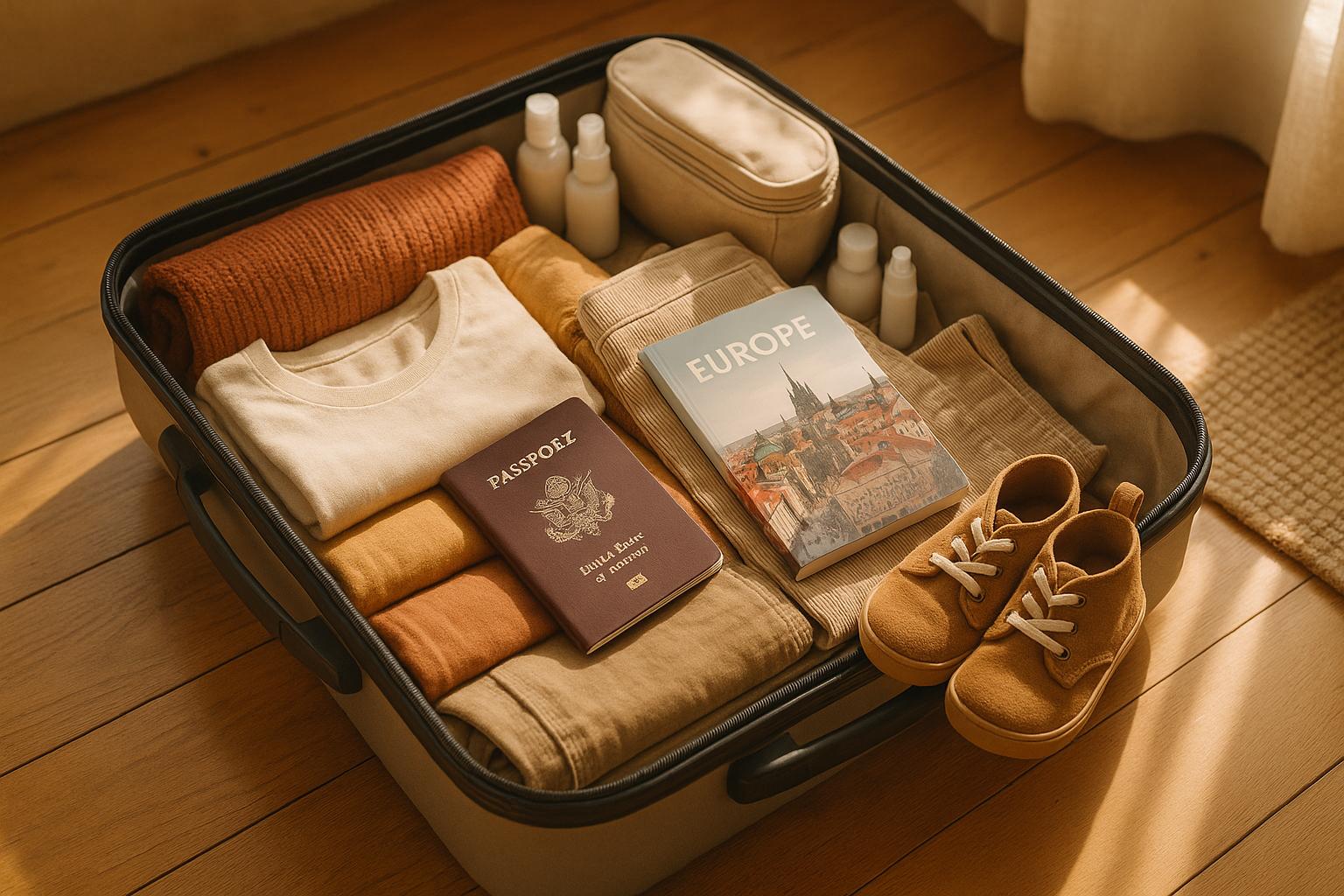
Family Packing Checklist for Europe

Packing for a family trip to Europe can feel overwhelming, but with the right plan, you can simplify the process. Here’s the key: focus on essentials, plan for varying weather, and prepare for cultural differences. Below is a quick summary of what you need to know:
1. Documents and Money
- Passports for every family member (valid for 6+ months after return).
- ETIAS or ETA for entry (depending on the country).
- Notify your bank of travel plans and carry a mix of cash and cards.
2. Clothing Tips
- Pack layers for unpredictable weather.
- Comfortable walking shoes are a must.
- Dress modestly for religious or formal sites.
3. Kids’ Essentials
- Lightweight strollers, baby carriers, and travel cribs.
- Snacks, reusable water bottles, and entertainment (downloaded shows, books, or games).
4. Toiletries and Health Supplies
- Medications in original containers.
- First-aid kit, sunscreen, and insect repellent.
5. Packing Hacks
- Use packing cubes to stay organized.
- Roll clothes to save space.
- Leave room for souvenirs or bring a foldable duffel bag.
This guide ensures you’re prepared for a smooth and enjoyable European adventure with your family.
Packing Light for Europe with Kids
Travel Documents and Money
Getting your paperwork and finances in order ahead of time is a must for hassle-free travel. When heading to Europe, specific documentation and financial planning will keep things smooth, so you can focus on enjoying the trip with your family.
Required Travel Documents
Every family member, including infants, needs a valid U.S. passport. Keep in mind, passports for children under 16 expire after five years. Most European countries require your passport to remain valid for at least six months beyond your return date, so double-check those expiration dates well in advance .
If you need to apply for or renew a passport, start early. Processing can take up to six weeks, and delays are common during peak travel seasons .
For travel to the Schengen Area, you’ll need an ETIAS (European Travel Information and Authorization System), while trips to the United Kingdom require an ETA (Electronic Travel Authorization) .
If one parent is traveling alone with the kids, a notarized letter of consent from the other parent is essential. This letter, written in English, should include the statement: "I acknowledge that my child is traveling outside the country with [name of the adult] with my permission". For parents with sole custody, a copy of the custody document is necessary. These steps help prevent international child abduction and make border crossings smoother.
Make photocopies of all important documents, leaving one set with a trusted contact and keeping another separate from the originals. For added security, save clear photos of your documents in a secure cloud storage account .
Consider enrolling in the Smart Traveler Enrollment Program (STEP) through the U.S. Department of State. This free service provides updates on safety conditions at your destination and allows U.S. embassies or consulates to contact you in case of emergencies .
Money and Payment Planning
Sorting out your finances is just as important as having the right travel documents. Notify your bank and credit card companies of your travel dates and destinations to avoid any unexpected service interruptions.
In Europe, euros are the main currency in 19 countries, but others, like the United Kingdom, Switzerland, and Norway, use their own currencies. Check which currency each destination requires and plan accordingly.
Carry some local currency for small purchases, tips, or public transportation, as cash is still widely used in many places. Ordering foreign currency from your bank before you leave is a good option, as airport exchange rates tend to be less favorable.
Use credit cards that waive foreign transaction fees, and make sure your cards have chip-and-PIN technology, which is standard in Europe. Bring at least two cards to have a backup in case one is lost or doesn’t work at a specific location.
For cash withdrawals abroad, ATMs linked to major banks usually offer the best exchange rates. Avoid standalone ATMs in tourist-heavy areas, as they often charge higher fees. To minimize fees, withdraw larger amounts less frequently.
Keep financial documents – like bank contact details, card numbers, and policy information – organized in a secure folder. Spread out emergency cash (including some U.S. dollars) among family members and store it in separate locations for added security.
Don’t forget to bring your travel insurance documentation. Keep policy numbers, coverage details, and emergency contact information handy in case you need them.
Clothing for European Weather
Europe’s ever-changing weather calls for smart packing and adaptable clothing choices.
Packing for Different Weather Conditions
Layering is essential when preparing for Europe’s unpredictable climate. Temperatures can swing dramatically in a single day. For instance, mornings in London might hover around 55°F, warming up to 75°F by afternoon, while Mediterranean evenings can dip to 65°F after reaching daytime highs of 85°F. Packing layers allows you to adjust as needed.
A compact rain jacket for each traveler is a must. Opt for jackets that fold into their own pocket to save space in your luggage.
Choose versatile clothing that works across temperature changes. A cardigan or lightweight sweater pairs well with a t-shirt for cooler mornings and can be tied around your waist as the day warms up. Long pants that can be rolled up to capri length are a practical option, giving you flexibility without overpacking.
Comfortable, broken-in walking shoes are a non-negotiable. Europe’s cobblestone streets can be tough on your feet, so leave new shoes at home to avoid blisters.
Even during summer trips, bring at least one warm layer. Southern Europe may feel hot during the day, but evenings can get chilly, and air-conditioned spaces like restaurants and hotels can feel colder than expected. A light jacket or hoodie will keep you comfortable.
If you’re traveling in fall, winter, or spring, waterproof footwear is essential. Pack boots or shoes that can handle wet streets and puddles. For summer, water-resistant sandals are a great option for sightseeing and even beach outings.
Family Clothing Considerations
To keep packing manageable, bring enough clothes for three to four days per person and plan to do laundry every few days. This strategy helps avoid overpacking while ensuring everyone has clean outfits.
For children, include an extra outfit for each day. Darker colors or patterned clothing can help conceal stains, which is especially handy for kids.
If you’re visiting religious sites, pack outfits that cover shoulders and knees. Lightweight scarves or shawls are great for quickly covering bare arms, and everyone should have at least one pair of long pants or a knee-length skirt.
Swimwear is a must, even if you’re not headed to a beach destination. Many European hotels have pools, and you might stumble upon opportunities to swim in lakes, rivers, or thermal baths. Pack swimsuits for everyone, along with quick-dry towels.
For sleepwear, choose options that work for varying temperatures. Breathable fabrics like cotton or bamboo are ideal for comfort in different climates.
Limit shoes to two extra pairs per person, in addition to the pair worn during travel. Include one pair for walking and sightseeing, and another dressier option for dinners or special events.
When it comes to essentials like underwear and socks, pack enough for the entire trip plus two extra days. These items take up little space, and it’s better to have a buffer. Moisture-wicking fabrics are a good choice since they dry quickly if you need to hand-wash them.
Finally, consider your laundry schedule when planning outfits. If laundry facilities might not be available as planned, pack an extra day’s worth of clothes as a backup to avoid any last-minute scrambles.
Once you’ve nailed the clothing essentials, you can focus on packing the right travel gear and keeping the kids entertained during your journey.
Travel Gear and Items for Kids
Traveling through Europe with kids means planning ahead and choosing gear that keeps everyone comfortable and stress-free.
Essential Travel Gear for Children
A lightweight, compact stroller (weighing under 15 lbs and easy to fold) is perfect for navigating Europe’s narrow cobblestone streets and busy public transit. For toddlers, umbrella-style strollers are a great choice, while families with infants might prefer travel systems that include car seat compatibility.
If you’re renting a car, confirm that the provided car seats meet European safety standards, such as ECE R44/04 or i-Size. This can save you the hassle of bringing your own.
For infants, a portable travel crib is a must. Look for one that sets up quickly (under two minutes) and weighs less than 20 lbs. While many European hotels offer cribs upon request, having your own ensures your baby’s sleep routine stays consistent.
For historic sites or places where strollers aren’t practical, a baby carrier or toddler hiking backpack is invaluable. It keeps your hands free to manage luggage or attend to other kids.
A compact, cross-body diaper bag with multiple compartments, insulated bottle pockets, and built-in wipe dispensers is ideal for long travel days.
Keeping Kids Entertained and Fed
Once you’ve got the gear sorted, plan for entertainment and snacks to keep your children happy during the journey.
Download movies, TV shows, and kid-friendly apps before leaving home to avoid expensive international data charges. A universal power adapter with multiple USB ports is essential, as European outlets (Types C, E, and F) differ from those in the U.S.
For screen-free options, pack small activity books, travel-sized games, and washable coloring sets. These can be lifesavers during flights or train rides.
Snacks are key when meal schedules don’t align with your kids’ hunger. Pack familiar items like granola bars, crackers, and dried fruit. Keep in mind that European meal times often differ from American ones – lunch may not be served until 2:00 PM, and dinner could start as late as 8:00 PM. Avoid fresh produce, as customs regulations typically prohibit bringing fruits and vegetables across borders.
Reusable water bottles for each child are a smart addition. Many European cities offer drinkable tap water and public fountains, making refills easy and cost-effective.
Lastly, include washable comfort items, like a favorite stuffed animal or blanket, to help your kids adjust to new environments.
First-Aid and Safety Must-Haves
Don’t forget to pack first-aid and safety essentials to handle any minor emergencies.
Bring along a first-aid kit stocked with band-aids, children’s acetaminophen or ibuprofen, a thermometer, and any required prescription medications. Keep medications in their original, clearly labeled containers.
Water-resistant sunscreen (SPF 30+) is crucial to protect against unexpected sun exposure, especially with sunlight reflecting off surfaces.
For safety, consider child identification tools like temporary tattoos with emergency contact details or GPS tracking devices.
Hand sanitizer and wet wipes are indispensable, especially since some European public restrooms may have limited supplies or charge small fees.
If your itinerary includes winding roads or ferry rides, pack motion sickness remedies. Options range from natural solutions like ginger chews to prescription medications.
Finally, include insect repellent (DEET-based or natural) to guard against mosquitoes and ticks during outdoor adventures.
Having the right gear and preparations in place ensures your European trip with kids is as smooth and enjoyable as possible.
sbb-itb-e918b7f
Toiletries and Health Products
When traveling through Europe with your family, having the right toiletries and health supplies can make all the difference. Here’s what you’ll need to stay comfortable and prepared for minor hiccups along the way.
Toiletry Essentials
Bring along the basics for everyone: toothbrushes, toothpaste, deodorant, and any essential skincare items. If someone in your family takes prescription medications, pack them in their original containers and include copies of any necessary documentation. For those who need them, ensure you have enough feminine hygiene products to last the entire trip.
Health and Safety Supplies
A small but well-stocked first-aid kit is a must. Include essentials like adhesive bandages, antiseptic wipes, antibiotic ointment, and pain relievers suitable for both adults and children.
Don’t forget to pack hand sanitizer, disinfecting wipes, and sunscreen with broad-spectrum protection, along with SPF lip balm to shield against the sun. To prepare for common travel-related issues, bring anti-diarrheals, antacids, and electrolyte packets. If anyone in your family has allergies or asthma, be sure to include allergy medications or inhalers.
Lastly, keep a laminated card with emergency contacts and travel insurance details handy for quick access if needed.
Packing Tips and Organization Methods
Packing smartly can make all the difference when traveling with your family. These tips will help you stay organized, pack efficiently, and even save room for those must-have souvenirs during your European adventure.
How to Pack Light for Families
Packing light with kids might seem like a challenge, but a few tricks can make it manageable. Packing cubes are a game-changer. These zippered compartments help keep everyone’s belongings organized and easy to find. Assign each family member a specific color cube so they can instantly locate their items without rummaging through the suitcase.
When it comes to clothing, rolling is the way to go. Roll casual clothes to maximize suitcase space and reduce wrinkles. For dressier items like shirts, bundle them around a core to keep them neat.
Stick to a simple color palette for the whole family. Pick two or three base colors that mix and match easily – this cuts down on the number of outfits you need to bring. Shoes are another space-hogging item, so limit each person to two pairs: comfortable walking shoes and a dressier option. For kids, one pair of sneakers and a pair of sandals should suffice for most destinations.
Pack clothes for about a week, even if your trip is longer. Many European cities have convenient laundry services at hotels or nearby laundromats, so you can refresh your wardrobe without overpacking.
Making and Using Packing Lists
A packing list is your best friend when prepping for a trip. Start drafting one a few weeks before departure. Use a digital document or spreadsheet to organize items into categories like travel documents, clothing, toiletries, electronics, and kid-specific essentials. This way, you won’t overlook anything important.
Set reminders on your phone for critical tasks, such as picking up prescriptions or confirming travel insurance. Once your list is finalized, print and laminate it for durability. Keep one copy in your carry-on for quick reference and another at home to help with repacking at hotels.
If you have older kids (around eight or older), involve them in the packing process. Assign them age-appropriate tasks to teach responsibility and ensure they don’t forget their favorite items.
Planning for Souvenirs and Shopping
Don’t forget to leave room for treasures you’ll pick up along the way. Reserve some empty space in your luggage for souvenirs and shopping finds. A lightweight, foldable duffel bag is a handy backup – it can double as an additional carry-on for your return flight.
Set a souvenir budget to keep spending in check while still enjoying local markets and unique items. Look into VAT refund policies for non-EU residents, which allow you to claim tax refunds on qualifying purchases. Save receipts and plan extra time at the airport for the refund process.
For larger items, consider shipping them home instead of squeezing them into your suitcase. It might be more affordable than paying overweight baggage fees. A portable digital scale that measures in pounds and kilograms can help you avoid surprises at the airport.
And here’s a pro tip: wear your heaviest purchases on the flight home to save luggage space and avoid extra fees.
Final Check and Departure Day
A well-organized departure morning can make all the difference, keeping stress levels low and ensuring nothing important gets left behind. These last steps will help your family head out smoothly and ready for your journey.
Departure Morning Essentials
Start your day with a quick review of the must-haves before zipping up your suitcases. Double-check that every family member’s passport is safely tucked into your travel document folder – this simple step can save you from one of the most common travel mishaps. Make sure you have printed boarding passes, hotel confirmations, and car rental vouchers all in an easily accessible spot.
Don’t overlook your electronics. Confirm that phones, tablets, and portable chargers are fully charged. Download offline maps, movies, or shows for entertainment, and verify that international service is activated if needed.
For families traveling with little ones, pack a carry-on comfort kit with essentials like stuffed animals, blankets, or pacifiers to make the flight easier. Toss in a change of clothes for toddlers to handle any spills or unexpected messes. Keep any necessary medications within reach in your carry-on bag.
Before heading out, take a few minutes to secure your home. Set timers for lights, pause your mail delivery, and share your emergency contact details with someone you trust. Lock all windows and doors, and consider snapping photos of important documents stored at home for easy access while you’re away.
Once these steps are complete, move on to the final details to fine-tune your departure.
Last-Minute Packing Tips
Before stepping out the door, go through these last checks. Weather can be unpredictable, so take one final look at the forecast for your European destinations. If rain is in the cards, make sure umbrellas or rain jackets are easy to grab. European weather apps tend to provide more accurate local forecasts than U.S.-based ones, so downloading one might be a good idea.
Use your portable luggage scale to check bag weights. Most airlines stick to the 50-pound limit for checked bags, and European carriers are often strict about this. If a bag is over the limit, shift items between bags or move heavier ones to your carry-on.
Double-check your money situation. Have some European cash on hand for immediate expenses like taxis or tips. Notify your credit card companies about your travel plans to avoid any issues with blocked cards.
Make a quick inventory of your valuables – cameras, tablets, jewelry – and back them up with photos stored in the cloud. This can be a lifesaver if anything goes missing during your trip.
Fully charge your phone and download backup boarding passes to your airline’s app. European airports often have limited charging stations, so starting with a fully charged device helps you stay connected, navigate terminals, and even translate on the go if needed.
Set your alarm, get a good night’s sleep, and prepare to embark on your European family adventure. With these final steps, you’ll be ready to enjoy a smooth and stress-free start to your journey.
FAQs
What travel documents does my family need for a trip to Europe, and how can I make sure they’re ready?
Planning a family trip to Europe? Make sure every family member, including infants, has a valid U.S. passport. For children under 16, passports are only valid for 5 years, and many European countries require that passports remain valid for at least 6 months beyond your travel dates.
Start by checking the expiration dates on your passports as soon as you begin planning. If renewals are needed, allow up to 6 weeks for processing, though it could take longer during peak times. Additionally, some countries may require a visa or electronic travel authorization. To avoid surprises, verify the specific entry requirements with the embassy of your destination.
If you’re traveling solo with your kids, you might need extra legal documents. These can include a notarized letter of permission from the other parent or proof of custody.
Keeping your documents in order will make your trip much smoother and far less stressful!
What’s the best way to pack for Europe’s unpredictable weather when traveling with kids?
Packing for a trip to Europe with kids doesn’t have to be overwhelming, even with the region’s famously unpredictable weather. The key? Layering. Pack short-sleeved shirts, long-sleeved tops, and a lightweight jacket to easily adjust to fluctuating temperatures. And since rain can pop up unexpectedly, a waterproof jacket with a hood is a must-have.
Stick to versatile clothing that can mix and match into multiple outfits – this saves precious suitcase space. Families should focus on packing efficiently by prioritizing essentials like snacks, travel games, and comfort items for the kids. With a little planning, you’ll be well-prepared for whatever weather Europe decides to throw your way!
How can I keep my kids entertained and comfortable during long travel days in Europe?
Keeping kids both entertained and comfortable during long travel days can make a world of difference for everyone. A tablet or device loaded with their favorite movies, games, or educational apps can provide hours of distraction. Compact options like coloring books, travel-sized card games, or small puzzles are also great for keeping little hands busy without taking up much room in your bag.
When it comes to comfort, think about items that help them relax. A neck pillow, a soft blanket, or their favorite stuffed animal can make long flights or train rides much cozier. Don’t overlook snacks and a reusable water bottle – keeping them fed and hydrated is key to a smoother journey. With a little planning, these small touches can transform travel days into more enjoyable experiences for everyone.