Ultimate Guide to London for First-Time Visitors

London combines centuries of history with modern attractions, making it a top destination for travelers. This guide simplifies your trip planning, covering when to visit, where to stay, how to get around, and must-see spots. Here’s what you need to know:
- Best Times to Visit: Late May and September offer mild weather and smaller crowds. Avoid peak tourist seasons in summer and during the holidays unless you enjoy the festive buzz.
- Duration: Plan for 3–5 days to cover key landmarks like Buckingham Palace, the Tower of London, and Westminster Abbey. More time lets you explore neighborhoods or take day trips.
- Where to Stay: Covent Garden, South Bank, and Kensington are great options, balancing proximity to attractions with different vibes.
- Getting Around: Use the Tube, buses, or walk between close landmarks. Contactless cards or Oyster cards make transport easy and affordable.
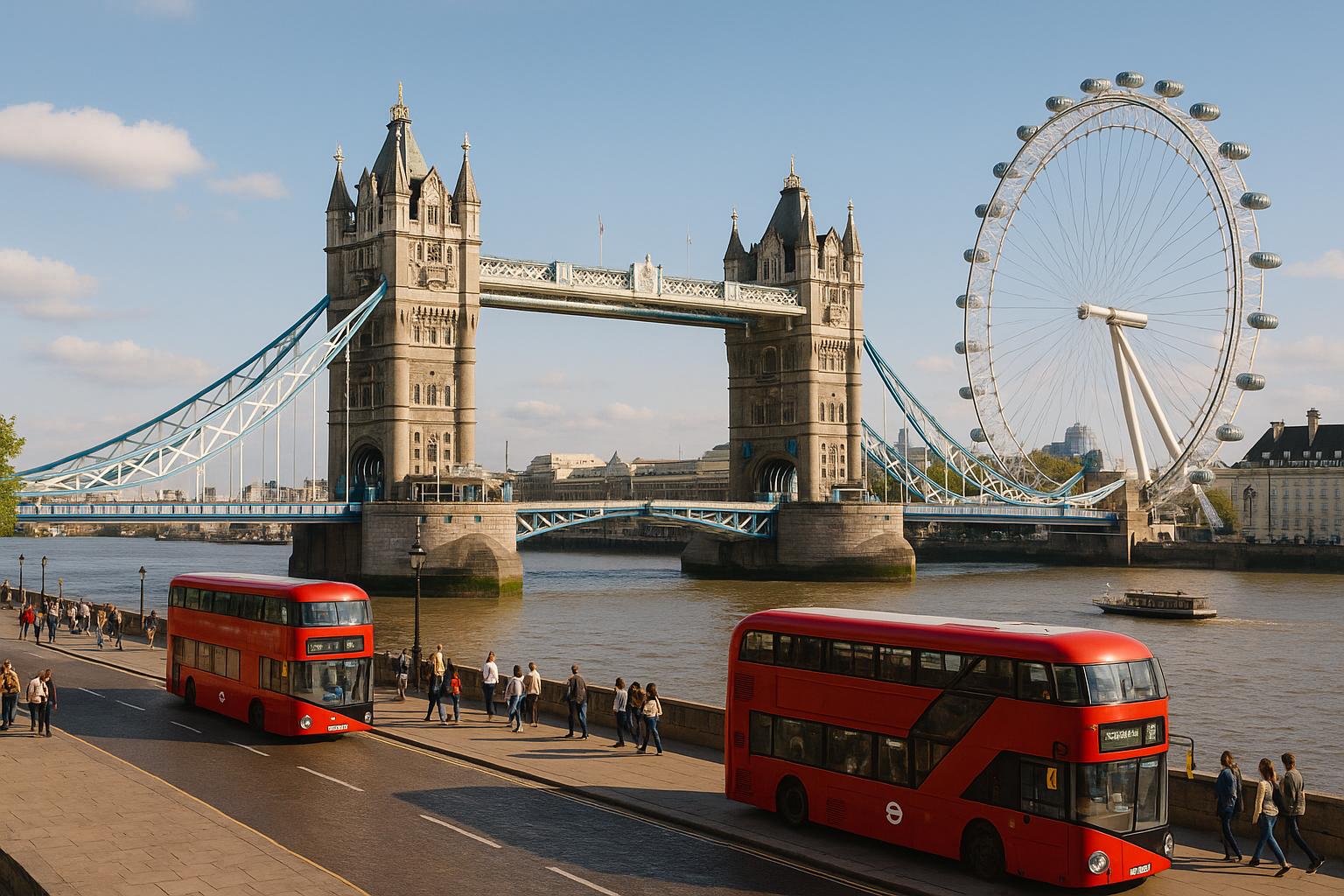
- Top Sights: Don’t miss the British Museum, Tower Bridge, the London Eye, and St. Paul’s Cathedral. Many museums are free, and parks like Hyde Park and St. James’s Park are perfect for relaxation.
- Budget Tips: Expect to spend $130–$195/day for a mid-range experience, with free attractions helping keep costs down. London is largely cashless, so use cards or mobile payments.
Whether you’re here for iconic landmarks, vibrant neighborhoods, or historic pubs, London offers something for everyone. Stay organized, pack layers for unpredictable weather, and enjoy exploring one of the world’s most dynamic cities.
London Trip Planning Guide: Duration, Budget, and Must-See Attractions
THE London First Timer Travel Guide: 15 MUST KNOW London Travel Tips
Planning Your Trip to London
London is a city where history meets modern life, and planning your visit well can make all the difference. Here’s what you need to know to make the most of your trip.
When to Visit London
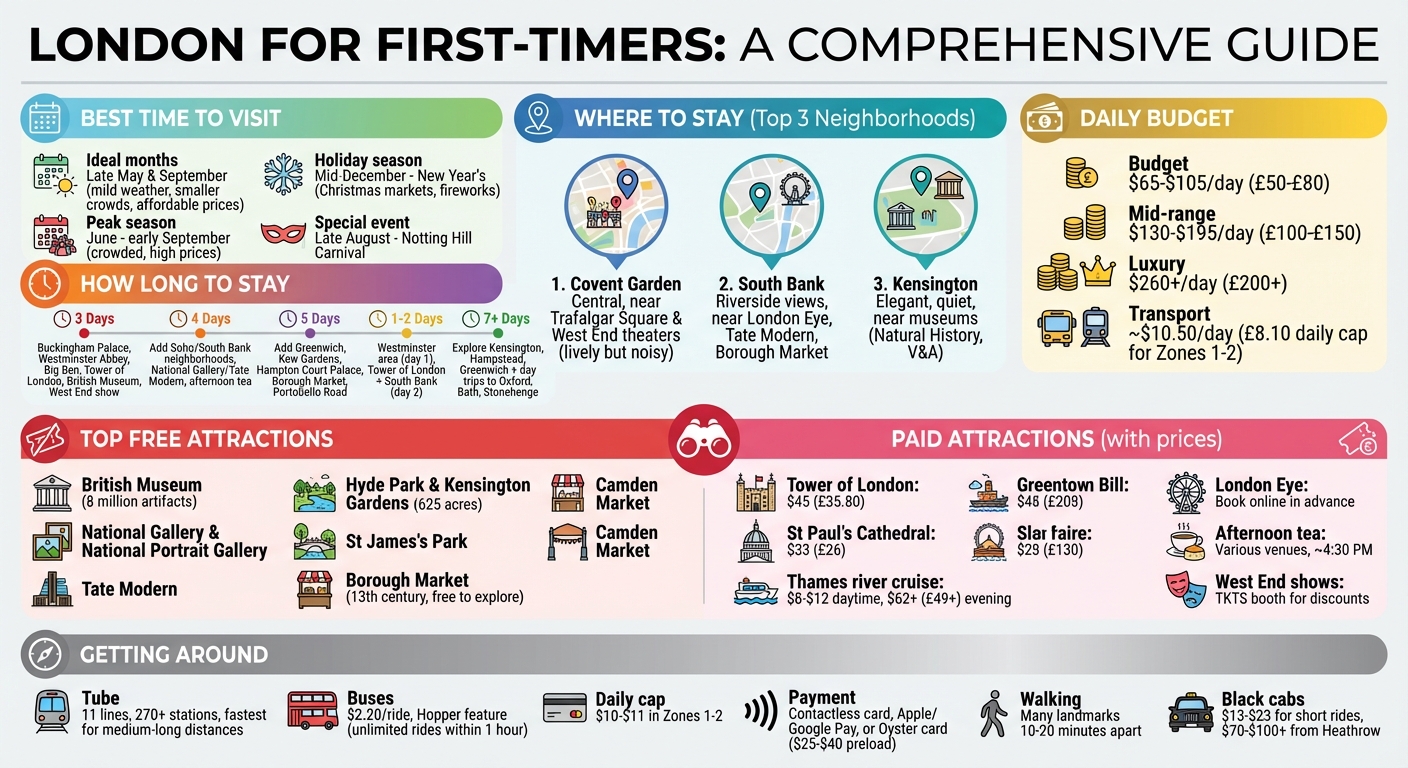
London’s weather is famously unpredictable, but it generally stays mild. Winters can be cold and damp, spring brings blooming parks, summers are warm but crowded, and autumns see cooler temperatures with more rain. If you’re looking for a sweet spot, late May and September offer a great mix of pleasant weather, smaller crowds, and more affordable prices.
The busiest times to visit are June through early September, when tourist attractions are packed, and prices soar. Another busy period is mid-December through New Year’s, when the city sparkles with Christmas markets, and the Thames lights up with New Year’s Eve fireworks. Keep in mind, tickets for the fireworks viewing areas sell out fast. Late August also brings the vibrant Notting Hill Carnival, which is an incredible experience but can lead to road closures and limited hotel availability.
How Long to Stay
For first-time visitors, 3–5 days is the sweet spot. Here’s how you can break it down:
- 3 days: Hit the iconic landmarks like Buckingham Palace, Westminster Abbey, Big Ben, the Tower of London, and the British Museum. Wrap up your evenings with a West End show.
- 4 days: Add some variety by exploring neighborhoods like Soho or South Bank, visiting the National Gallery or Tate Modern, or indulging in a proper afternoon tea.
- 5 days: Venture further out to suburban gems like Greenwich, Kew Gardens, or Hampton Court Palace. You’ll also have time to browse famous markets like Borough Market or Portobello Road.
Shorter on time? If you’ve only got 1–2 days, focus on compact areas. Spend one day in Westminster (think Westminster Abbey, Big Ben, and Buckingham Palace) and a central museum. On day two, head to the Tower of London, Tower Bridge, South Bank, and Borough Market. Pre-booking tickets can help you make the most of your limited time.
For those lucky enough to stay a week or longer, slow down and explore neighborhoods like Kensington, Hampstead, or Greenwich. You can also take day trips to places like Oxford, Bath, or Stonehenge to see more of England.
If you’re flying in from the U.S., keep jet lag in mind. Overnight flights typically land in the morning, so plan a low-key first day with outdoor sights or easy walks rather than packed museum visits. And if your return flight is in the morning or early afternoon, don’t count your last day as a full sightseeing opportunity.
Where to Stay
Where you stay can shape your London experience. Here are some top neighborhoods to consider:
- Covent Garden: This central spot is close to Trafalgar Square, West End theaters, and the Thames. While it’s lively and convenient, it can also be noisy and pricey.
- South Bank: Perfect for stunning riverside views, this area near Waterloo and London Bridge offers easy access to attractions like the London Eye, Tate Modern, and Borough Market. Plus, the Thames-side walking paths are a treat.
- Kensington: Known for its elegant streets and proximity to major museums like the Natural History Museum and the Victoria and Albert Museum, Kensington is quieter and more residential. It’s a great pick for families or those seeking a peaceful base.
Wherever you stay, choose a spot near a Tube station to make getting around easier. Grouping nearby attractions into the same day – like the Tower of London, Tower Bridge, and Borough Market – will help you save both time and energy.
Getting Around London
London boasts a well-connected transport system that makes exploring the city both convenient and efficient. Whether you’re riding the Tube, hopping on a red bus, taking an Overground train, or cruising along the Thames, there are plenty of options to suit your travel needs. The Tube, with its 11 lines and over 270 stations, is the quickest way to cover medium to long distances, while the iconic double-decker buses not only fill in the gaps where the Tube doesn’t go but also offer fantastic views from the top deck. Here’s a closer look at navigating London by public transport, on foot, or using taxis and accessible services.
Public Transportation
London’s transport network is designed for ease, with contactless payments being the standard. You can use a contactless card, mobile payment methods like Apple Pay or Google Pay, or an Oyster card preloaded with $25–$40. Both options charge the same fares and include daily caps, meaning once you spend about $10–$11 in Zones 1 and 2 on a weekday, the rest of your travel that day is free.
The city is divided into nine fare zones, but most major attractions are conveniently located in Zones 1 and 2. A single bus ride costs around $2.20, and the Hopper feature allows unlimited bus and tram rides within an hour for the same fare. While the Tube is faster for longer trips, it’s best to avoid rush hours (7:30–9:30 a.m. and 4:30–6:30 p.m. on weekdays) when stations can get overcrowded. For a more relaxed and scenic option, the Uber Boat by Thames Clippers offers river cruises between piers like Westminster, Tower, and Greenwich, with fares ranging from $6 to $11.
Walking and Taxis
Central London is a pedestrian-friendly area, with many landmarks just a 10–20 minute walk apart. In fact, walking is often quicker than taking a short Tube ride. Popular attractions such as Westminster Abbey, Trafalgar Square, Covent Garden, and Leicester Square are easily accessible on foot.
When you need a ride, London’s black cabs are a classic choice. These metered taxis are generally wheelchair-accessible and can be flagged down on the street or found at designated taxi ranks. A short ride within central London (10–15 minutes) typically costs $13–$23, while a trip from Heathrow Airport to central London can range from $70 to $100 or more, depending on traffic. For a more budget-friendly option, ride-hailing apps like Uber, Bolt, and Free Now are widely available and are often cheaper, especially for longer trips. While tipping isn’t mandatory, rounding up to the nearest dollar or adding about 10% is customary for good service.
Accessibility Options
London’s transportation system is designed to accommodate travelers with mobility needs. All buses are low-floor and wheelchair-accessible, providing priority seating and ample space. Around 30% of Tube stations offer step-free access from the street to the train, including key hubs like Green Park, Victoria, and Westminster. TfL’s Step-Free Tube Map and Journey Planner are great tools for finding accessible routes. Most Thames river boats are also step-free, and many black cabs are equipped to handle wheelchairs. If mobility is a concern, consider planning your itinerary around neighborhoods to reduce the need for transfers. It’s also a good idea to contact attractions in advance to confirm details like ramp or elevator access.
sbb-itb-e918b7f
What to See and Do in London
London is a city where history, culture, and modern life blend seamlessly. With its centuries-old landmarks, world-famous attractions, and lively neighborhoods, it offers something for everyone. For first-time visitors, the challenge isn’t finding things to do – it’s deciding where to start. The good news? Many of London’s highlights are within walking distance, and plenty of must-see spots won’t cost you a dime.
Main Landmarks
Kick off your trip at the Tower of London, a fortress with a history spanning over 1,000 years. Once a royal palace, prison, and treasury, it now houses the Crown Jewels and offers Yeoman Warder (Beefeater) tours led by the iconic uniformed guards. Tickets start at about $45 (£35.80), and if you arrive right at 10:00 a.m. on a Sunday or Monday, you’ll avoid the crowds. Plan to spend around three hours exploring before heading over to Tower Bridge for stunning photos and a walk across its glass floor.
No visit to London is complete without stopping by Buckingham Palace, especially during the Changing of the Guard ceremony. This event typically happens at 11:00 a.m. on Mondays, Wednesdays, and Fridays, but arriving by 10:00 a.m. ensures a good viewing spot. If you’re visiting in summer, consider booking a tour of the State Rooms in advance. Even if you stay outside, combining a visit to the palace with a stroll through St James’s Park creates a quintessential royal experience.
Another iconic stop is Westminster Abbey, where British monarchs have been crowned since 1066. After exploring the Abbey’s tombs and memorials, walk toward Big Ben and end your route at Trafalgar Square for more sightseeing.
For unbeatable views, head to the London Eye. Whether you ride at sunset or after dark, the cityscape is breathtaking as the lights come on. Booking tickets online in advance helps you skip the lines, and the nearby South Bank offers plenty to enjoy, from street performers to food stalls and views of Westminster Bridge.
Another must-see is St Paul’s Cathedral, designed by Christopher Wren and famous for its iconic dome. Tickets cost about $33 (£26), and the climb to the top rewards you with panoramic views of the city. Pair your visit with a walk across the Millennium Bridge to explore the Tate Modern and Shakespeare’s Globe.
Classic London Activities
London isn’t just about landmarks – it’s also about experiences that capture its unique character.
A Thames river cruise offers a fresh perspective on the city’s skyline. Daytime cruises between the Tower of London and Westminster cost around $8–$12, while evening cruises, starting at about $62 (£49), showcase the city illuminated at night.
Indulge in a classic afternoon tea, a tradition that’s as British as it gets. Venues like The Wolseley, Brown’s Hotel, and Capital Hotel serve tea with finger sandwiches, scones, and pastries around 4:30 p.m. Reservations are a good idea, especially on weekends, and a smart-casual dress code is typically expected.
For theater lovers, catching a West End show is a must. Flexible visitors can snag same-day discount tickets at the TKTS booth in Leicester Square, while those wanting to see popular productions like The Lion King or Hamilton should book ahead online. Most evening performances start at 7:30 p.m.
A visit to a historic pub is another way to soak in London’s local culture. Many central pubs serve classic British dishes like fish and chips or Sunday roasts alongside a pint. For a relaxed atmosphere, visit around 6:00–7:00 p.m., and remember that most pubs operate on a pay-at-the-bar system.
Free and Low-Cost Attractions
London is famously budget-friendly when it comes to its museums and parks, making it easy to balance iconic experiences with affordable adventures.
The British Museum is home to over 8 million artifacts, including the Rosetta Stone and Egyptian mummies. Aim to visit after lunch when crowds thin out, and set aside two to three hours to explore its treasures.
Art lovers will appreciate the National Gallery and National Portrait Gallery, both located in Trafalgar Square. These galleries feature works by masters like Van Gogh, Monet, and Rembrandt, making them perfect for a mid-afternoon cultural break during a Westminster sightseeing day.
For contemporary art, head to the Tate Modern on the South Bank. Housed in a former power station, its main galleries are free, and the top-floor terrace offers fantastic views of London.
London’s royal parks are open 24/7 and completely free. Hyde Park and Kensington Gardens cover about 625 acres, offering scenic paths, the Serpentine lake, and landmarks like the Peter Pan statue. Meanwhile, St James’s Park, near Buckingham Palace, is smaller but beautifully landscaped, with pelicans often spotted by the pond.
For foodies, Borough Market is a must-visit. This historic market, with roots dating back to the 13th century, is free to explore and brimming with artisan cheeses, fresh pastries, and international street food. Fridays and Saturdays are especially lively, and it’s just a short walk from London Bridge and The Shard.
Finally, Camden Market offers a completely different vibe. Known for its alternative fashion, vintage goods, and global street food, it’s a maze of stalls and courtyards that’s especially buzzing on weekends. It’s the perfect spot to experience London’s eclectic and creative energy.
Practical Tips for First-Time Visitors
What to Pack
London’s weather can be unpredictable, so packing smart is key. Summers usually range from 59°F to 77°F, often with showers, while winters average between 32°F and 50°F. Bring lightweight, breathable layers, a waterproof jacket, and sturdy walking shoes – especially since you’ll likely be walking 10,000–20,000 steps a day. Versatile clothing that you can easily add or remove will help you handle the city’s ever-changing weather.
If you’re visiting from the US, keep in mind that the UK uses Type G plugs (230V). Check if your devices are dual-voltage compatible, and pack an adapter if needed. A portable charger is also a lifesaver for long sightseeing days, and a reusable water bottle is a great idea – London’s tap water is completely safe to drink.
For staying connected, consider an eSIM plan to avoid hefty roaming fees. Providers like Airalo or Holafly offer plans ranging from 1GB to 10GB for $4.50–$37 (lasting 7–30 days), while Nomad provides unlimited data for $20–$30 per week. Simply download their app and scan the QR code upon arrival at Heathrow to enjoy reliable 5G coverage in central London.
Safety and Local Customs
Once you’re packed, it’s helpful to be aware of local safety tips and customs. Central London is relatively safe, but crowded tourist spots like Trafalgar Square, Borough Market, and the Tube can attract pickpockets. Keep your valuables in a secure cross-body bag or front pockets, and be cautious of distraction scams.
Traffic in the UK drives on the left, so when crossing streets, always check to your right first. Look out for the yellow "LOOK RIGHT" signs at pedestrian crossings, and stick to marked crossings while following traffic signals.
Londoners take queueing seriously – whether you’re at a bus stop, ticket counter, or pub, always wait your turn. Cutting in line is frowned upon and may earn you some disapproving looks. In pubs, ordering and paying at the bar is standard practice, and tipping for drinks isn’t expected. On Tube escalators, stand on the right to let others pass on the left, and always allow passengers to exit before boarding trains or buses.
Money and Budgeting
Planning your budget wisely can make your trip much smoother. For a mid-range experience, plan to spend about £100–£150 ($130–$195) per day, which should cover meals, transport (around £8 daily Oyster cap), and one or two paid attractions. Budget travelers can aim for £50–£80 ($65–$105) by enjoying free museums, meal deals, and walking between sights. If you’re splurging, a daily budget of £200+ ($260+) can include extras like West End shows or occasional taxi rides.
London is largely cashless, so you can use your contactless Visa, Mastercard, Apple Pay, or Google Pay for almost everything – from Tube gates and buses to shops and restaurants. Most US bank cards work without issues, and transactions under £100 ($130) often don’t require a PIN. The daily fare cap of about £8.10 ($10.50) for Zones 1–2 is applied automatically, so there’s no need to worry about overspending on transport. Just be sure to notify your bank before traveling to avoid any card blocks.
Tipping in London is quite modest. Many restaurants include a 12.5% service charge; if not, tipping 10–12.5% is customary. In pubs, simply rounding up your bill is fine. For taxis, round up to the nearest £1, and at hotels, tipping £1–£2 per bag is appreciated.
Keep these tips in mind as you explore London’s sights, enjoy its food, and navigate the city with ease.
Conclusion
A well-thought-out plan is the key to enjoying the best of London. Grouping attractions by neighborhood – like exploring the Tower of London, Tower Bridge, and Borough Market in a single day – helps make the most of your time. A 3–5 day visit allows you to see iconic spots like Buckingham Palace, Westminster Abbey, and the British Museum while leaving room for unexpected discoveries in charming areas such as Covent Garden or the South Bank.
Make use of an Oyster card for smooth travel across the city. Balance must-see landmarks with authentic local experiences: catch a West End show, savor the diverse flavors at Borough Market, or simply soak in the atmosphere while people-watching in Hyde Park. Budgeting $100–$200 per day should comfortably cover meals, transportation, and attractions, with contactless payments making transactions a breeze.
Pack flexible clothing layers, bring the right adapters for your devices, and stay mindful of your belongings in busy areas. Embrace local customs like queueing and remember to stick to the left when navigating the streets. London’s efficient transport system, walkable neighborhoods, and abundance of free attractions make it easy to craft a trip that’s both structured and full of delightful surprises.
For more tips on family-friendly itineraries and lesser-known gems in London and beyond, check out Pigeon Pair and Me. From cultural highlights to seasonal events, it’s your go-to guide for making every adventure unforgettable. London is ready to charm you – now you’re ready to explore it like a true local.
FAQs
What are the top neighborhoods to stay in for first-time visitors to London?
For first-time visitors, some of the best neighborhoods to consider staying in London are Westminster, Covent Garden, Soho, South Bank, and Kensington. These spots not only put you close to iconic landmarks but also provide fantastic dining options and easy access to public transportation.
Westminster is a great choice if you want to be near famous sights like Big Ben and Buckingham Palace. Covent Garden and Soho are buzzing with energy, offering a mix of restaurants, theaters, and unique shops. If you’re after stunning riverside views and cultural attractions, South Bank delivers. For a quieter, more laid-back experience, Kensington is perfect, with its beautiful parks and renowned museums just a short stroll away.
What’s the best way to get around London using public transportation?
For easy travel around London, grab yourself an Oyster card or simply use a contactless credit or debit card to pay for public transport. Whether you’re hopping on buses, the Tube, or trains, these payment methods are both convenient and budget-friendly. Plus, they automatically calculate the best fare for your trip.
To plan your journey, the Transport for London (TfL) app or website is your go-to tool. It offers real-time updates on schedules, delays, and service disruptions. If you’re just heading somewhere nearby, walking or renting a bike is a great way to explore London’s neighborhoods while taking in the views. Before you head out, check for the latest updates to keep your travel hassle-free!
What are some affordable things to do in London?
London is packed with budget-friendly activities for visitors to enjoy. Many world-class museums, including the British Museum, National Gallery, and Tate Modern, welcome guests with free admission. Beyond museums, the city’s lush green spaces – like Hyde Park, Regent’s Park, and St. James’s Park – offer the perfect setting for a peaceful walk or a laid-back picnic.
For those looking to dive into the city’s character, iconic neighborhoods such as Notting Hill, Camden, and Covent Garden provide plenty to see and experience without opening your wallet. If you’re curious about London’s history and charm, consider joining a walking tour – many of which are budget-friendly or even free.