Best Christmas Markets in Germany 2025

German Christmas markets are a holiday favorite, combining festive decor, delicious food, and unique gifts. Most markets in 2025 will run from November 26th to December 22nd, with some in major cities like Berlin and Munich starting earlier. For fewer crowds, visit on weekdays in late November or early December. Popular markets include:
- Nuremberg Christkindlesmarkt: Famous for its Christkind ceremony, Nürnberger sausages, and gingerbread.
- Dresden Striezelmarkt: Known for its Stollen festival, tall Christmas pyramid, and candle arches.
- Munich Marienplatz Market: Features Bavarian folk music, Nativity displays, and the Krampuslauf parade.
- Berlin Markets: A variety of options, from upscale crafts to cozy, historic stalls.
Plan ahead for dates, weather, and crowds to enjoy Germany’s festive markets at their best.
10 Christmas Markets in Germany with dates for 2025!
Planning Your Visit: Tips for 2025
Making the most of your trip to German Christmas markets in 2025 requires a bit of preparation. Knowing the best dates and planning around the schedules can help you enjoy a hassle-free experience.
When and How to Visit
Most German Christmas markets in 2025 will run from November 26th to December 22nd. While many officially kick off on Friday, November 28th, to align with the first Sunday of Advent on November 30th, some larger cities like Berlin or Munich might open as early as November 17th or 24th.
For a more relaxed visit, aim for weekdays – Monday through Thursday – especially in late November or early December. This way, you can avoid the heavy crowds that tend to gather closer to Christmas.
With millions of visitors expected – Nuremberg’s market alone anticipates around 2 million guests – timing your visit is crucial. Most markets close by December 22nd or 23rd, but a few in major cities like Berlin, Cologne, Dortmund, and Koblenz remain open into late December or even early January.
Top Christmas Markets in Germany 2025
Germany’s Christmas markets are a magical blend of tradition, charm, and festive spirit. Each market has its own unique flair, making them must-visit destinations for the 2025 holiday season. Here’s a glimpse of what makes these markets so special.
Nuremberg Christkindlesmarkt
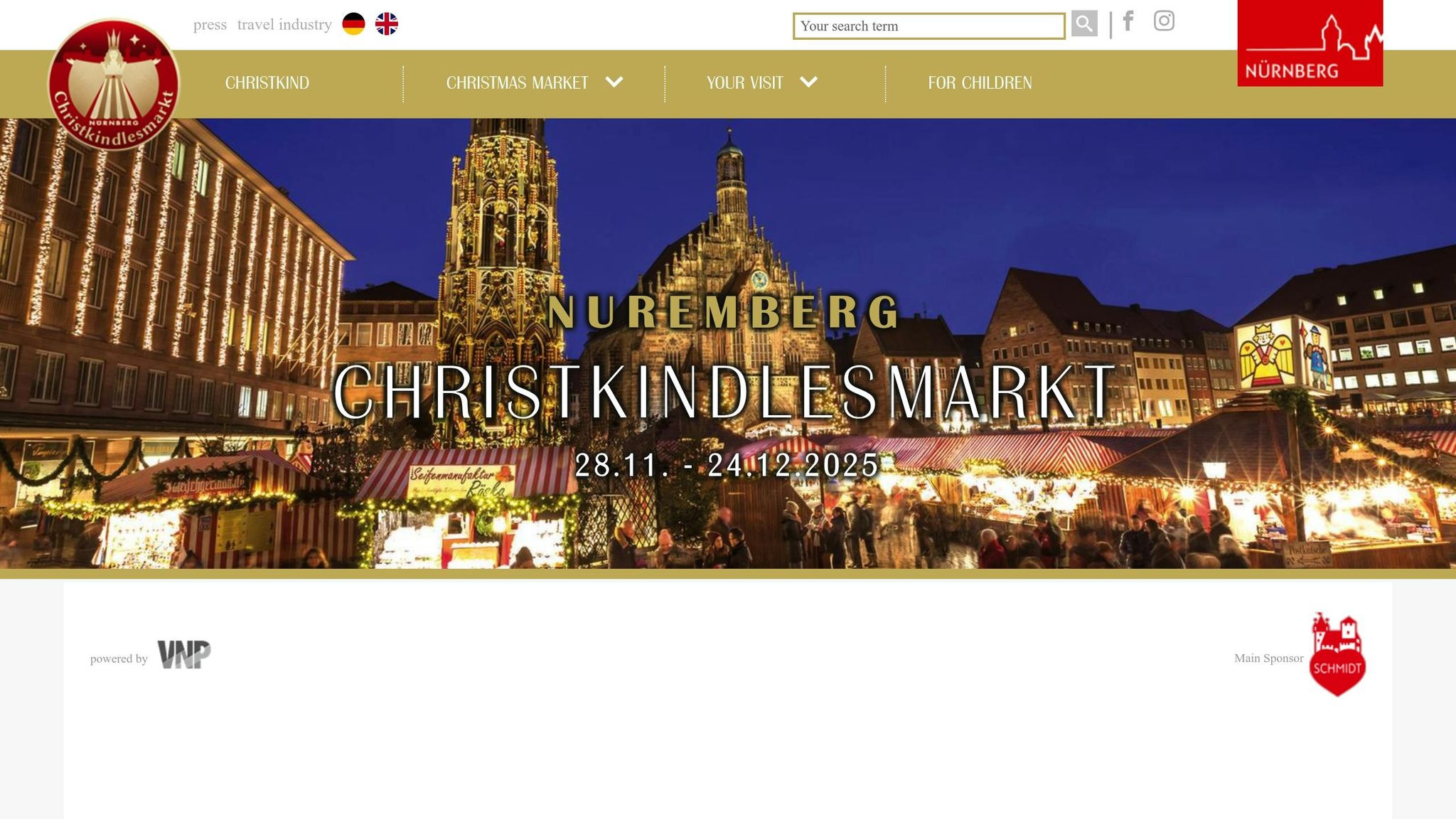
Nuremberg’s Christkindlesmarkt is perhaps the most iconic Christmas market in Germany. Its signature red-and-white striped stalls create a picturesque holiday scene, but the real highlight is the Christkind ceremony that officially kicks off the festivities. Visitors can indulge in Nürnberger würstchen (small, flavorful sausages) and Lebkuchen (spiced gingerbread), both crafted using age-old recipes. Families will appreciate the dedicated Children’s Christmas Market, designed with younger visitors in mind.
Dresden Striezelmarkt
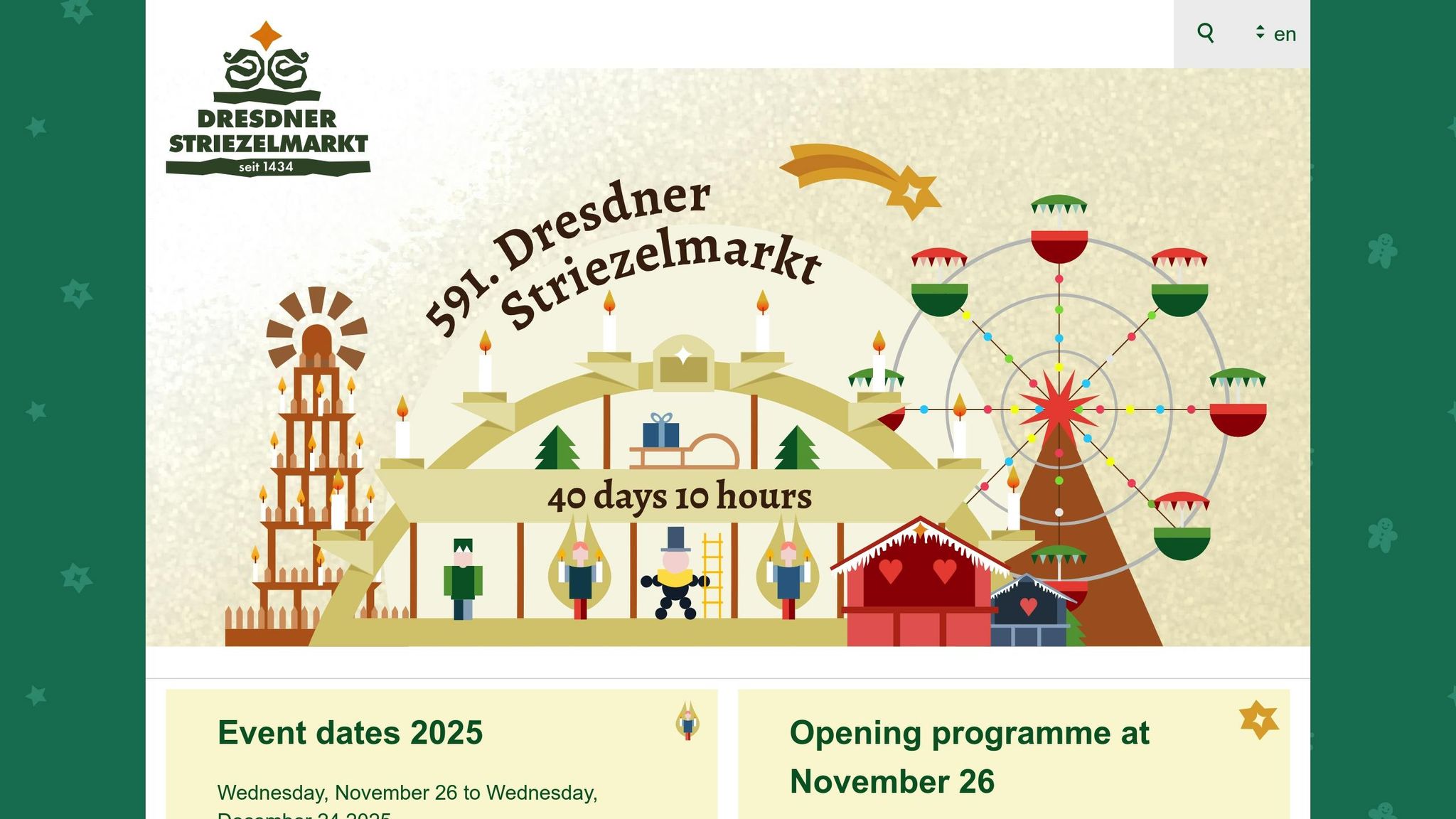
Dating back to 1434, Dresden’s Striezelmarkt is steeped in history and tradition. One of its standout events is the Stollen festival, which celebrates the city’s famous fruitcake. The market is also home to record-breaking attractions like the world’s tallest Christmas pyramid and the largest schwibbogen (a decorative candle arch). For a quirky touch, don’t miss the edible Pflaumentoffel figures, which add a playful element to the festive atmosphere.
Munich Marienplatz Market
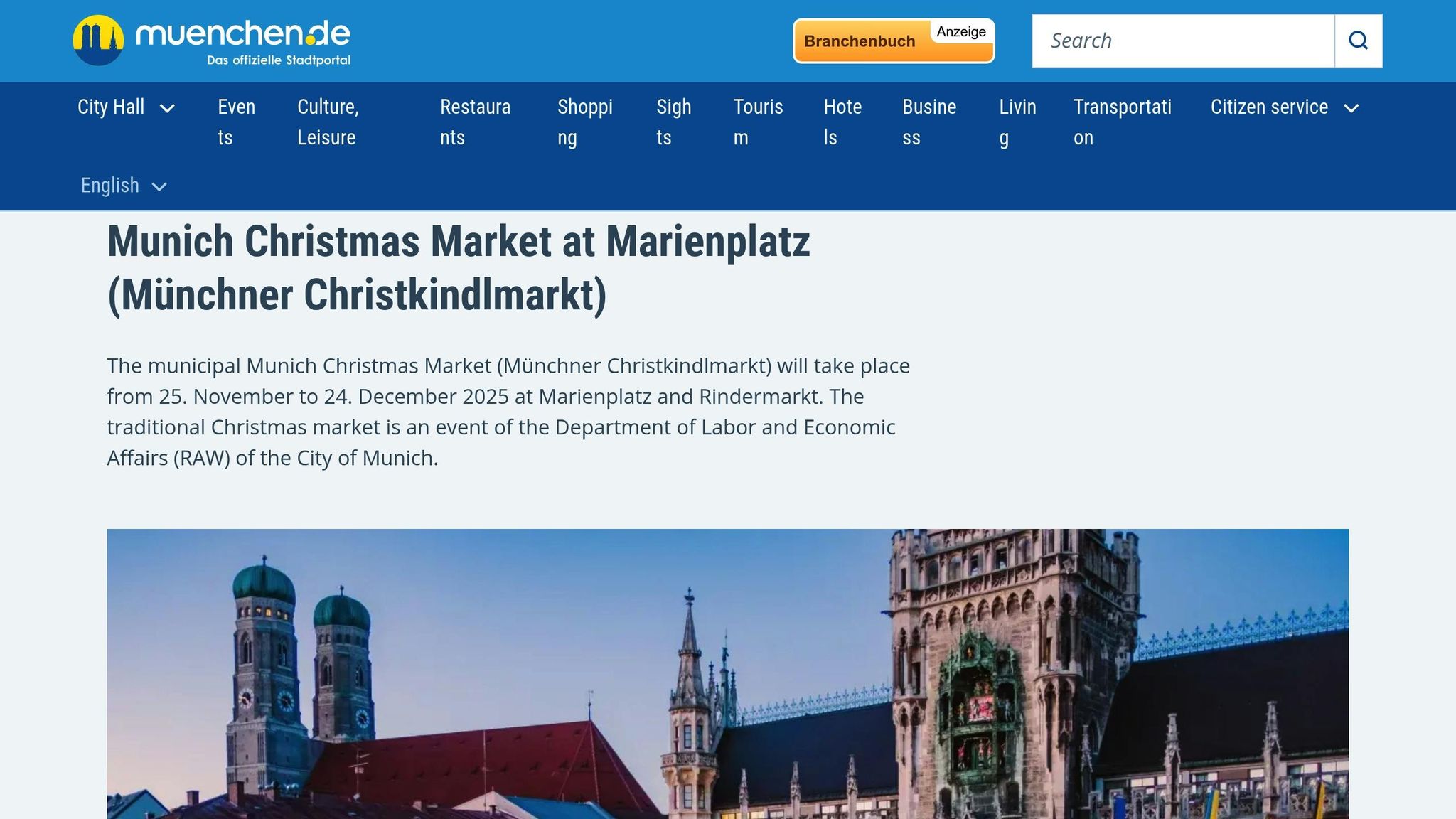
Set against the backdrop of Munich’s neo-Gothic town hall, the Christkindlmarkt at Marienplatz is the city’s oldest and largest Christmas market. A highlight here is the Krampuslauf parade, where participants dressed as Krampus – a creature from Alpine folklore – roam the streets. Visitors can enjoy daily performances of Bavarian folk music and browse Germany’s largest market dedicated to Nativity scenes.
Berlin‘s Christmas Markets
Berlin offers a variety of Christmas markets, each with its own personality. From upscale venues showcasing high-quality crafts to smaller, historic markets with a cozy vibe, there’s something for everyone. Whether you’re looking for unique gifts, delicious treats, or simply a festive atmosphere, Berlin’s markets deliver unforgettable holiday experiences.
sbb-itb-e918b7f
Market Comparison: Features and Family Options
Germany’s Christmas markets each bring something unique to the table, from their traditions and attractions to family-friendly amenities. Here’s a closer look at how some of the most famous markets compare.
Comparison Table
| Market | Location | Season Dates | Key Family Features | Food Specialties |
|---|---|---|---|---|
| Nuremberg Christkindlesmarkt | Hauptmarkt Square | Late November to December | A dedicated children’s area, festive rides, and family-friendly attractions | Nürnberger würstchen and traditional Lebkuchen |
| Dresden Striezelmarkt | Altmarkt Square | Late November to December | A towering Christmas pyramid, hands-on workshops, and puppet shows | Stollen cake and seasonal specialty treats |
| Munich Marienplatz | City Center | Late November to December | Nativity scene displays, Bavarian folk performances, and festive parades | Classic Glühwein and Bavarian pretzels |
| Berlin Markets | Multiple locations | Late November to Early January | A variety of market styles, with indoor and outdoor options to suit all tastes | International cuisine and local craft beverages |
What to Consider When Choosing a Market
The layout and atmosphere of each market can make a big difference, especially if you’re visiting with family. For instance, Nuremberg’s compact design is ideal for families with young children, making it easier to navigate. On the other hand, Berlin’s markets are spread across multiple locations, so planning ahead is essential to make the most of your visit. If convenience is a priority, Munich’s excellent public transportation system makes getting to and from the market a breeze.
Weather can also play a role in your decision. Markets like Berlin offer both covered stalls and indoor spaces, which can be a lifesaver on rainy or snowy days. Meanwhile, Dresden and Nuremberg shine with their traditional, storybook-like atmospheres, perfect for those seeking a classic Christmas vibe. If you’re looking for variety, Berlin’s cosmopolitan mix of offerings might be more your speed.
Crowd levels can also impact your experience. Nuremberg tends to get packed on late-season weekends, while Dresden sees more visitors on weekday evenings. Munich, with its spacious layout, strikes a balance by offering a steady flow of visitors without feeling overcrowded.
Tips for a Better Visit
Avoiding Crowds and Planning Your Time
Timing is everything when it comes to enjoying the charm of German Christmas markets without the hassle of large crowds. The best strategy? Visit during the early afternoon on weekdays. For instance, the Frankfurt Christmas market opens at 10:00 AM on weekdays and at 11:00 AM on Saturdays, making weekday mornings an ideal time to explore peacefully.
Late afternoons to early evenings on weekdays strike a nice balance – there’s enough buzz to feel festive, but it’s not as packed as weekend nights, which can get overwhelmingly crowded.
If you can, plan your visit for late November or early December. Crowds tend to swell as Christmas approaches. For example, Nuremberg’s Christkindlesmarkt experienced heavy foot traffic on its Friday opening, highlighting the advantage of visiting earlier in the week.
For a more intimate and relaxed experience, consider exploring markets in smaller towns or cities. These often feature the same festive ambiance with fewer tourists, offering a more authentic and enjoyable holiday outing. By planning your visit thoughtfully, you can soak in the magic of these markets without the stress of navigating through throngs of visitors.
Conclusion: Planning Your German Christmas Market Trip
Germany’s Christmas markets offer a festive atmosphere that blends holiday cheer with a touch of tradition. Whether you’re marveling at the classic wooden stalls of the Nuremberg Christkindlesmarkt or strolling through Dresden’s historic Striezelmarkt, each market has something special to make your holiday season unforgettable.
To make the most of your trip, a little preparation goes a long way. Start by checking the operating dates for the markets you want to visit, as they can vary. Winter weather can be unpredictable, so pack plenty of layers and some waterproof clothing. Don’t forget to plan your budget – prices for food, drinks, and handmade ornaments can differ from market to market.
These markets are more than just shopping destinations; they’re an opportunity to experience traditions that have been celebrated for centuries. Sip on a warm mug of mulled wine, sample local treats, and browse unique crafts that you won’t find anywhere else. Whether you’re traveling with family or friends, these markets provide a holiday experience that feels both warm and timeless. If you’re thinking about a 2025 visit, now’s the time to start planning. Choose dates that let you enjoy the festive vibe without overwhelming crowds, and get ready for a holiday adventure that’s truly one of a kind.
FAQs
What’s the best way to avoid crowds at Germany’s Christmas markets in 2025?
If you want to experience Germany’s Christmas markets without battling the crowds, aim for a weekday visit or go earlier in the day – ideally before 3:00 PM. Most people tend to show up in the late afternoon or evening, especially on weekends, making these quieter hours a perfect opportunity to soak in the festive atmosphere.
Another option is to check out smaller or less touristy markets away from the main city centers. These spots often have a more intimate vibe, fewer visitors, and still deliver all the holiday magic with tasty treats and one-of-a-kind crafts.
What are the key differences between Nuremberg’s Christkindlesmarkt and Dresden’s Striezelmarkt?
Nuremberg’s Christkindlesmarkt ranks among Germany’s most celebrated Christmas markets, attracting more than 2 million visitors annually. Nestled amidst historic architecture, it’s known for its enchanting ambiance, authentic handcrafted decorations, and mouthwatering treats like Lebkuchen (gingerbread). The market embodies the essence of a traditional German Christmas, offering a warm and nostalgic experience.
Meanwhile, Dresden’s Striezelmarkt holds the distinction of being Germany’s oldest documented Christmas market, with origins dating back to 1434. It boasts remarkable features like the world’s largest usable Christmas arch and an impressive 46-foot Erzgebirge Christmas pyramid. A visit wouldn’t be complete without sampling the renowned Dresdner Christstollen, a festive fruitcake that hails from the region. While both markets promise memorable visits, Dresden’s deep historical roots and iconic holiday attractions make it particularly special.
What should I know about planning a trip to multiple Christmas markets in Germany, including travel and weather tips?
When planning a trip to explore Germany’s Christmas markets, it’s useful to know that most of them open in late November and continue until just before Christmas. A few might kick off earlier, typically on the Monday before the first Sunday of Advent. To make the most of your visit, check the exact dates for each market and plan your route accordingly.
As for travel essentials, be prepared for plenty of walking and standing. Bring comfortable, waterproof, and insulated shoes to keep your feet warm and dry. December in Germany can be quite cold, with average temperatures in Berlin ranging between 43°F and 32°F. Layer up with warm clothing, and don’t forget winter accessories like a scarf, gloves, and a hat to stay cozy while soaking in the festive cheer.