5 Tips for Enjoying Food Tours with Kids

Taking kids on food tours can be a fun, engaging way to explore a city’s flavors and history. Here’s how to make the experience enjoyable for everyone:
- Choose a family-friendly tour: Look for shorter tours (2–3 hours) with frequent stops and kid-approved foods like pizza or pastries.
- Prepare kids for new foods: Introduce international dishes at home and encourage curiosity about different cuisines.
- Keep the pace relaxed: Opt for tours with minimal walking, pre-arranged meals, and fun stops along the way.
- Let kids participate: Involve them in food choices and engage with guides who share stories and activities.
- Match the tour to your budget: Compare costs, check for discounts, and choose morning tours when kids are most energetic.
Food tours can turn meals into memorable adventures by blending tasting with storytelling and hands-on experiences. With a little planning, they’re a great way to connect as a family while discovering new places.
Food Tour Planning Guide for Families with Kids
Exploring Malaysian Cuisine and Culture with Kids: Kuala Lumpur Food Tour
1. Pick a tour designed for families
Not all food tours are ideal for families. Some focus on long tastings at upscale spots or feature exotic dishes that might not appeal to younger palates. To ensure a smooth experience, look for tours specifically labeled as family-friendly when browsing operator websites or booking platforms. These tours are often crafted with kids in mind, offering shorter durations (usually around 3 hours), more frequent stops, and menus filled with familiar, kid-approved foods. They’re built to create fun and engaging culinary adventures for the whole family.
Family-focused tours often feature crowd-pleasers like pizza, barbecue, donuts, and sandwiches while keeping logistics simple. For example, many tours include pre-arranged access to skip long lines – a lifesaver for families. At Seattle’s Pike Place Market, visitors to Daily Dozen Doughnut Company can bypass the wait, making it easier to keep kids happy and engaged. Similarly, Tastebud Tours in Chicago offers family-friendly stops, including deep-dish pizza at Pizano’s and Italian beef sandwiches at Al’s. In Austin, the Austin Eats Food Truck Tour ensures a hassle-free experience with reserved picnic tables at La Barbecue, where families can enjoy brisket, sausage, and coleslaw without enduring long waits.
A knowledgeable guide can make a world of difference, too. They keep kids entertained with lively stories, like how deep-dish pizza became a Chicago icon or the unique differences between Cajun and Creole cooking in New Orleans. These little nuggets of information make each stop both fun and educational.
Before booking, it’s smart to contact tour operators directly. Ask about age restrictions, dietary accommodations, and whether the tour’s pace aligns with your family’s needs.
2. Get kids ready for different foods and customs
Ease your kids into the adventure of trying new flavors by starting at home. Begin with simple international recipes that you can make together as a family – Mexican huevos rancheros, Portuguese egg tarts, or Irish colcannon are great options. Letting kids sample these dishes ahead of time can make them more open to trying similar foods during your trip. This early exposure also sets the stage for engaging, hands-on activities during the tour itself.
Turn cooking into a fun family event. Get the kids involved with easy tasks like stirring ingredients or setting the table. You could even create a mini "food tour" at home by sampling dishes from different countries and talking about their origins. Use maps or photos of your upcoming destinations to spark curiosity and excitement.
Add a layer of storytelling to the experience by sharing the history behind each dish. For example, explain how Italian immigrants brought the Italian beef sandwich to Chicago or highlight the differences between Cajun and Creole cooking styles.
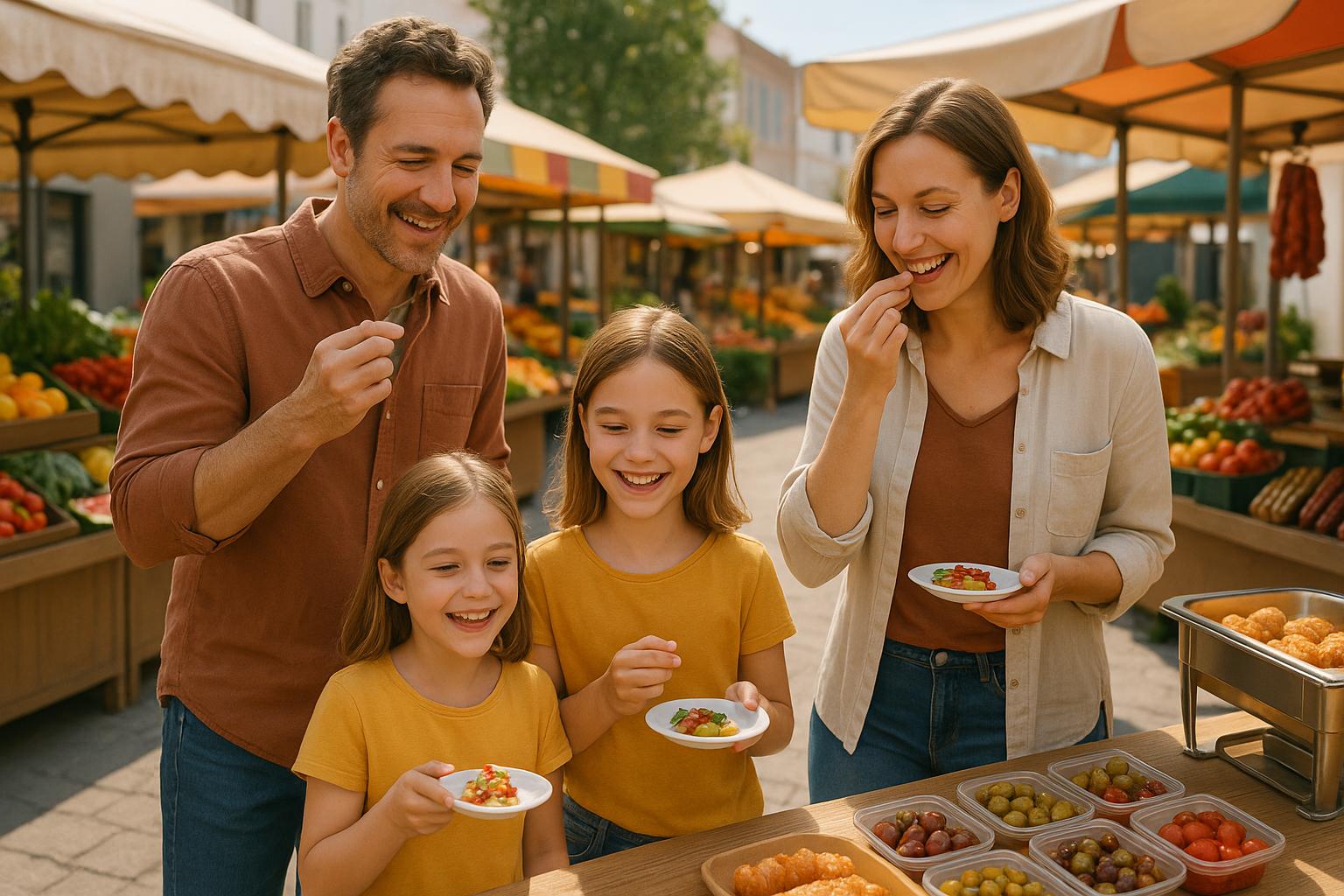
For a more interactive experience, visit a local food market during off-peak hours and let everyone in the family pick one unfamiliar item to try. Whether it’s a unique fruit, an unusual cheese, or a regional specialty, this activity can make trying new foods feel like an adventure.
If food allergies are a concern, be sure to notify your tour operator in advance. Practice preparing safe alternatives at home to ensure everyone can enjoy the culinary experience worry-free.
3. Maintain a relaxed pace with fun activities
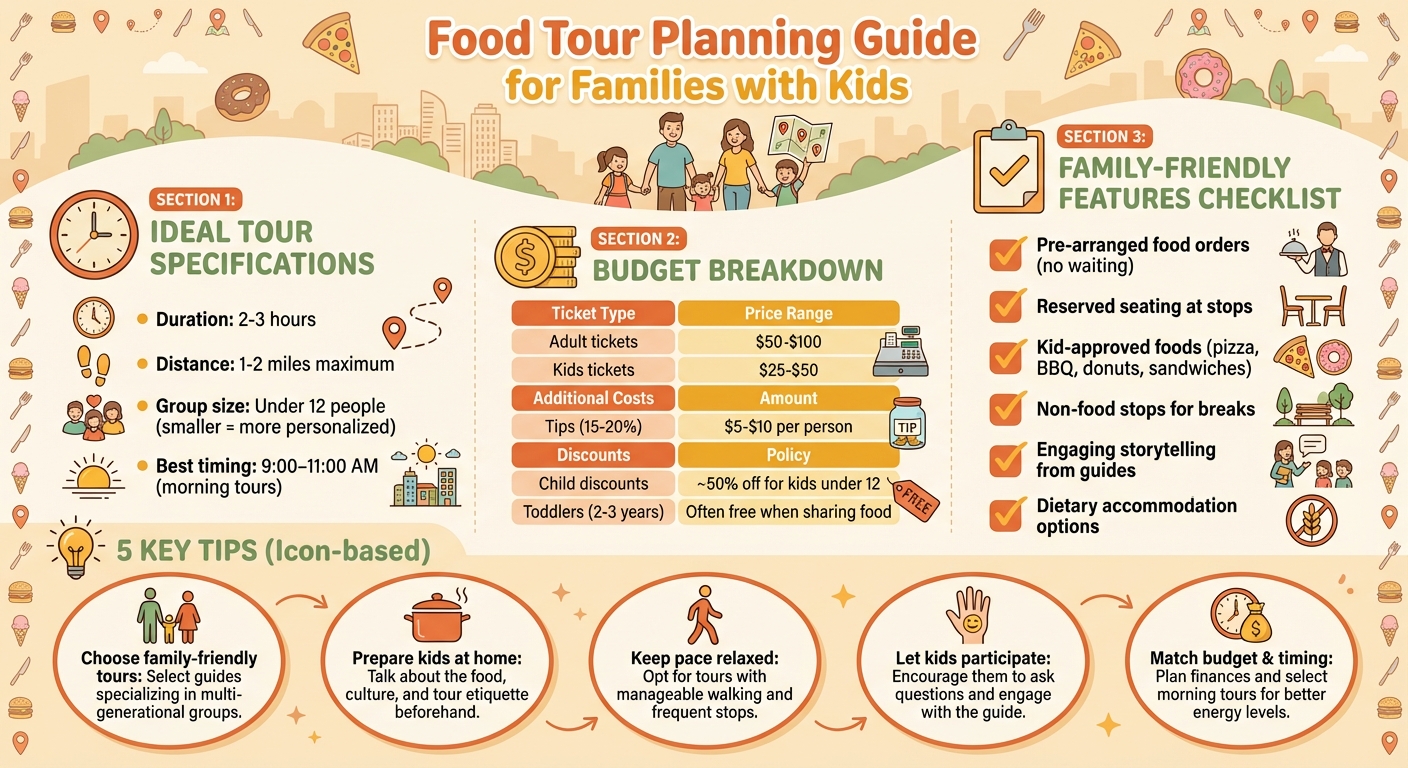
The sweet spot for food tours with kids? About 2–3 hours long and covering no more than 1–2 miles. Experts in family travel suggest this timeframe as it aligns with children’s energy levels and attention spans, keeping things fun without risking a meltdown. For instance, Foods of NY Tours keeps their routes under a mile, while San Francisco’s Little Italy tour spans just 7–8 blocks – perfect for kids to manage between tastings. To make things even smoother, many tours arrange food orders ahead of time so there’s no waiting around.
Look for tours that skip the hassle of long lines by pre-ordering food. Some operators ensure meals are ready as you arrive, saving time and keeping everyone happy. For example, Austin Eats reserves tables at BBQ joints, so families can dive into their meal without waiting.
The best tours also mix in non-food stops to keep kids engaged and give them a breather between bites. Minneapolis Riverwalk tours, for example, include scenic views of St. Anthony Falls. Or take Seattle’s famous Gum Wall – it’s a quirky stop, but kids often find it fascinating.
Timing is everything when planning a relaxed outing. Opt for morning or late afternoon tours when kids are typically in their best moods, and avoid scheduling during naptime or late evenings. Chicago’s Tastebud Tours even starts with a pizza "breakfast" and spaces out tastings with fun stories, like the history of Italian beef sandwiches dating back to 1938. This turns the walk into an engaging blend of food and learning. Lastly, keep your plans flexible – whether that means lingering at a favorite stop or wrapping up early, leaving room for spontaneity can make the experience even more enjoyable.
sbb-itb-e918b7f
4. Let Kids Participate in the Food Experience
Getting kids involved can turn a simple food tour into an exciting, hands-on adventure. When children have a say in choosing menu items or customizing their orders, they’re far more likely to step out of their comfort zones and try something new. It’s an easy way to transform a meal into a memorable experience.
Tour guides can make all the difference in sparking kids’ curiosity about food. By sharing stories about where dishes come from or how they’re made, guides naturally draw children into the experience. For example, on Tastebud Tours’ Taste of Chicago, guide Annalynn Keller took families on a culinary journey that started with deep-dish pizza "breakfast" at Pizano’s and ended with Italian beef at Al’s. Her storytelling kept kids engaged, with some teens humorously dubbing the dishes as the "two teen basic food groups" – meat and bread. This approach turned tasting into learning, keeping young participants captivated. Stories like these often lead to hands-on activities that make the experience even more interactive.
The group dynamic also plays a big role in encouraging kids to explore new flavors. Peer encouragement and a guide’s enthusiasm can inspire even the pickiest eaters. One parent shared how their 8-year-old surprised everyone by identifying the truffle aroma in a sample of Paris cheese during a guided tasting – something they’d never seen happen at home. Food tours create a welcoming environment where kids feel safe to experiment and discover.
Interactive activities take the experience to another level. At outdoor markets, for instance, you can let each child pick one unfamiliar food to try and share with the family. Planning visits during quieter times helps avoid overwhelming crowds. In one heartwarming example, a 6-year-old visiting a kitchen garden at The Hyatt in Kauai learned how ingredients are grown and saw how they connected to the dishes on the menu. Later, this knowledge made their dining choices more meaningful. Moments like these leave a lasting impression, turning a simple meal into an unforgettable memory.
5. Match the tour to your budget and timing
Food tours can get pricey, so it’s smart to know the costs upfront. In big U.S. cities like Chicago or New Orleans, adult tickets usually range from $50 to $100, while kids’ tickets fall between $25 and $50. Don’t forget to budget for tips – typically 15–20% of the ticket price, which works out to about $5–$10 per person – and for transportation to the meeting point. Always check what’s included in the price. Some tours cover tastings, drinks, and even tips, while others might charge extra for beverages or desserts. Cheaper tours may save you money but could cut corners with smaller portions or fewer stops.
Timing is just as important as budgeting. Morning tours, between 9:00 and 11:00 AM, are often the best choice, especially for families with young kids. Younger children are usually more alert earlier in the day, so you can avoid cranky moments during nap times or late evenings. Booking a tour early in your trip can also be a game-changer. Guides often share recommendations for kid-friendly dining spots, helping you plan the rest of your meals. For example, one family in Portland discovered a morning biking food tour that started with coffee and kept everyone entertained until lunchtime.
Keep in mind the tour’s duration and group size – they can make or break the experience. Tours lasting 2–3 hours are ideal for kids, as anything longer might lead to boredom or fatigue. Smaller groups, usually fewer than 12 people, tend to offer a more relaxed pace and personalized attention, though they may cost a bit more. Larger groups can lower the price but might feel rushed. Look for child discounts, which are often around 50% off for kids under 12, and check if toddlers aged 2–3 can join for free when sharing food with an adult.
If you’re working with a tight budget, consider weekday or off-peak tours. Some families save money by balancing one paid tour with free activities, like exploring local markets on their own. A food tour can even replace a full meal, so factor those savings into your overall budget. Before booking, read reviews carefully to ensure the tour is worth it. Look for options that pre-arrange stops at ethnic eateries with reserved seating and no waiting in line – these often provide better value than tours where you’re stuck standing around.
Conclusion
Taking food tours with kids can be an unforgettable way to explore new flavors and traditions together. Opting for a family-friendly tour sets the tone for a smooth and enjoyable experience. You can prepare your little ones in advance by introducing them to new tastes at home. Keeping things stress-free, like scheduling tours with pre-arranged stops, helps avoid long waits and keeps everyone happy. When kids get involved – whether by picking out dishes or learning the stories behind them – the experience becomes both fun and educational.
As Lynn F. Jaynes, founder of Tastebud Tours, puts it, these tours highlight "quintessential foods… from the places where they originated", making each outing a chance to learn and connect.
The group setting of food tours often encourages kids to step out of their comfort zones and try unfamiliar dishes, which can turn even the pickiest eaters into curious tasters. To ensure a smooth experience, align the tour with your schedule and budget, and consider booking morning slots when kids are more energetic. Following the guide’s advice also helps keep everyone engaged and entertained.
Ultimately, a thoughtfully chosen food tour can bring families closer while opening up new culinary experiences. Whether you’re wandering through U.S. cities or venturing into European destinations, these shared moments create lasting memories.
For more tips on family travel and European food tours, check out Pigeon Pair and Me. Their guides are packed with insights on attractions, hidden gems, and experiences to help you plan your next adventure.
FAQs
What makes a food tour suitable for families with kids?
When selecting a food tour for your family, aim for one that keeps kids interested and having fun. The best family-friendly tours often move at an easygoing pace, include interactive activities like cooking or tasting sessions, and offer dishes that kids are likely to enjoy.
It’s also a good idea to see if the tour allows for flexibility, such as shorter schedules or built-in breaks, making it a pleasant experience for all ages.
How can I help my kids feel excited about trying new foods on a tour?
Start by offering new foods at home in small portions to help them feel more approachable. Involve your kids in the process by letting them pick out dishes or snacks during your outing – it adds a sense of fun and gives them a bit of control. To pique their interest, share fun stories or quirky facts about the food’s background or where it comes from. Keep the mood upbeat and celebrate even the tiniest effort to try something different – it’s all part of the adventure!
How can I save money on food tours with kids?
To make food tours easier on your wallet, try sharing dishes with your group. This way, you can taste a variety of flavors without ordering too much. Look out for free or inexpensive tastings, and aim to visit during off-peak hours – some spots might have discounts during quieter times. Packing a few snacks is another smart move to keep hunger at bay between stops without stretching your budget.