Spring Break in Europe: City vs. Countryside for Families

Spring break in Europe offers families two distinct vacation styles: the vibrant energy of cities or the laid-back charm of the countryside. Cities like London, Paris, and Barcelona pack in attractions, public transit convenience, and dining options, while countryside destinations such as Tuscany and the Cotswolds provide open spaces, outdoor activities, and a slower pace. Deciding between them depends on your family’s preferences, budget, and travel style.
Key Takeaways:
- Cities: Ideal for older kids and teens who enjoy museums, historic landmarks, and structured activities. Expect higher daily costs but easy public transit and plenty of indoor options for rainy days.
- Countryside: Great for younger kids needing space to roam. Accommodations are often more affordable, but a rental car is typically required. Activities focus on nature and relaxation.
Quick Comparison:
| Criteria | City Break | Countryside Break |
|---|---|---|
| Cost | Higher (e.g., $225/night) | Lower (e.g., $140/night) |
| Transport | Public transit ($20–$30/day) | Rental car ($40–$70/day) |
| Activities | Museums, landmarks | Hiking, farm stays |
| Pace | Fast, structured | Relaxed, flexible |
| Weather Options | Indoor attractions available | Reliant on outdoor activities |
For a balanced trip, consider combining both: explore a city for a few days, then unwind in the countryside. For example, pair London with the Cotswolds or Lisbon with Portugal’s Alentejo region. Tailor your itinerary to your family’s needs, and plan ahead for Easter crowds and spring weather.
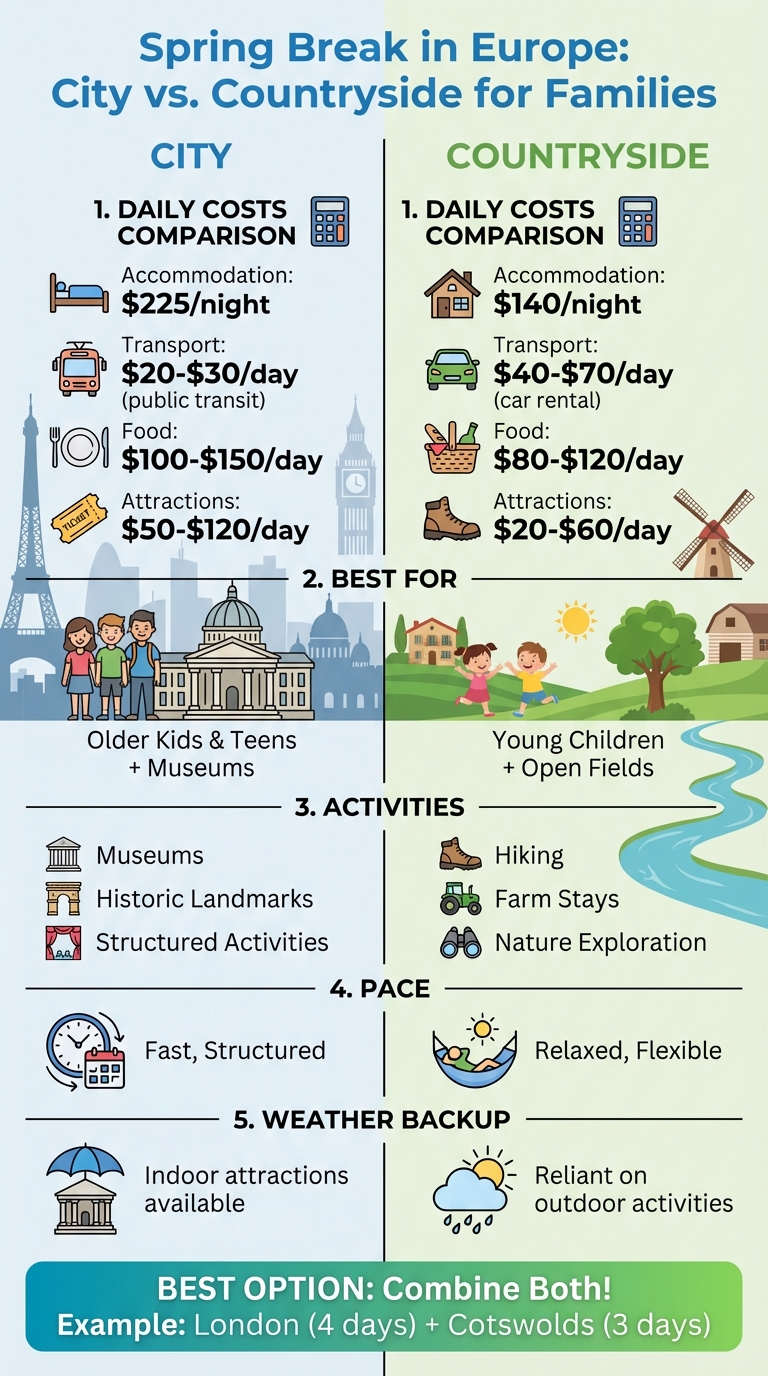
European Spring Break: City vs Countryside Cost and Activity Comparison for Families
European Cities for Family Spring Break
What City Breaks Look Like
A day exploring a European city with the family often follows a relaxed yet structured rhythm. It kicks off with breakfast, leading into 2–3 planned activities with breaks in between. Mornings are usually reserved for visiting a major museum or landmark, followed by lunch, and then a more laid-back afternoon activity like a boat cruise, a walking tour, or even a stop at a playground. By early evening, families often wrap up with dinner and a short stroll, perhaps with a gelato in hand – perfect for younger kids. Over a weeklong trip, most families find a mix of 4–5 "big" attractions and smaller, low-key experiences strikes the right balance between sightseeing and relaxation.
Take London, for instance. A family day might begin with a visit to the Tower of London, continue with a cruise along the Thames, and end with playtime at the South Bank playgrounds before enjoying dinner in Covent Garden. In Barcelona, mornings might feature a visit to Park Güell or Montjuïc, while afternoons could include downtime at the beach or Ciutadella Park. This blend of structured plans and flexibility makes city breaks both enjoyable and practical.
Benefits of City Spring Breaks
European cities come with plenty of perks for family travel. Public transit systems are excellent, reducing the need for rental cars and making it easier to get around with kids. Many cities offer family-friendly transit passes or day cards, often with discounts or free rides for younger children. Plus, historic city centers are usually very walkable, which is a bonus when traveling with little ones.
Cities also shine when it comes to indoor attractions. Museums and aquariums are fantastic options for those unpredictable rainy days, ensuring plans can pivot without much hassle. Dining is another highlight – whether it’s casual bakeries, bustling local markets, or kid-friendly international restaurants, there’s something for every palate. And when it comes to practical needs, cities are well-equipped with pharmacies, supermarkets, and hospitals. For tailored tips on family-friendly neighborhoods, dining spots, and seasonal highlights like cherry blossoms or spring festivals, resources like Pigeon Pair and Me offer helpful, up-to-date advice on destinations like London and other European cities.
Drawbacks of City Spring Breaks
Of course, city breaks come with their own set of challenges. Accommodations, especially in central, walkable areas, can be pricey, and major attractions often draw large crowds during Easter and school holidays. The hustle and bustle of a city – its noise, traffic, and fast pace – can sometimes feel overwhelming, particularly for younger children. Long days of walking or navigating busy transit hubs can lead to tired little ones, and strollers can be tricky to manage on metro stairs or in tight café spaces.
Historic streets with cobblestones and steps make lightweight, foldable strollers much more practical than bulkier options. Parents can ease some of these challenges by traveling slightly off-peak, booking time-slot tickets for popular attractions early in the day, and scheduling midday breaks back at the hotel. Opting for quieter residential neighborhoods and adding buffer days focused on parks or playgrounds can also help. Including "kid-choice" moments – like a visit to a fun park or a stop for dessert – can keep the little ones engaged and in good spirits. By addressing these hurdles, families can balance the vibrant energy of city life with moments of calm, setting the stage for a memorable trip.
European Countryside for Family Spring Break
What Countryside Breaks Look Like
A spring break in the countryside offers a refreshing change of pace compared to bustling city trips. Mornings often start with a relaxed breakfast, followed by flexible outdoor activities that cater to all ages. You might find yourself strolling through rolling hills, cycling along quiet country roads, or exploring a nearby village with a playground and a lively local market. Instead of museum queues and crowded streets, afternoons are often spent feeding farm animals, picking fresh produce, or simply unwinding in spacious gardens.
Destinations like Tuscany, the Cotswolds, Provence, Umbria, and Corsica are perfect for countryside escapes. Tuscany charms visitors with hilltop villages like San Gimignano and scenic bike rides through peaceful landscapes. The Cotswolds delights with its honey-colored stone villages, easy woodland walks, and cozy pubs with family-friendly gardens. Provence offers blooming orchards, bustling markets, and historic towns with Roman ruins. Umbria combines farm stays with medieval castles, while Corsica’s interior boasts family-friendly trails and river swimming – though the water stays brisk until late spring.
Evenings in the countryside are all about unwinding. Families can cook together, enjoy a meal at a local inn, or wind down with board games and stargazing. The unstructured nature of these trips means more free time for kids to roam and play without the constant worry of traffic or tight schedules. These rural getaways provide a welcome contrast to the fast pace of city vacations, offering their own unique set of advantages and challenges.
Benefits of Countryside Spring Breaks
One of the biggest perks of a countryside vacation is the space and affordability. Villas, cottages, and farm apartments often come with separate bedrooms, outdoor areas for kids to play, and even shared pools – all at prices that can rival or beat the cost of multiple hotel rooms in major cities. For instance, in Tuscany, agriturismo accommodations typically range from €100–€200 per night during March and April, often with the added bonus of a kitchen.
The slower pace of countryside life is another huge plus. Without the pressure of timed tickets, long lines, or bustling streets, families can easily work in naps, early bedtimes, and downtime. Open fields and walking trails give kids the chance to burn off energy, which often leads to better moods and improved sleep. Shopping at local markets and preparing meals in your rental not only saves money but also adds to the experience of living like a local. With quieter nights, safe spaces for kids to explore, and plenty of screen-free outdoor activities, the countryside is an ideal choice for families looking to truly relax and recharge.
Drawbacks of Countryside Spring Breaks
However, countryside trips aren’t without their challenges. One major downside is the need for a rental car, which can add extra costs and stress. If you’re unfamiliar with European driving, make sure to request an automatic transmission – these are less common – and double-check car seat requirements before booking.
Another limitation is the lack of indoor attractions like museums or aquariums, which can make it tricky to keep everyone entertained during a stretch of cold or rainy weather. Speaking of weather, spring temperatures vary widely by region. For example, Tuscany typically sees daytime highs between 59–65°F (15–18°C), while the Cotswolds hover in the 50s°F (10–15°C) with frequent showers. Provence is slightly warmer, with highs in the 60s°F (15–20°C), but mornings and evenings remain chilly everywhere. Packing layers, waterproof jackets, and sturdy shoes is essential.
Dining in rural areas can also be less convenient than in cities. Restaurants are often fewer in number, with limited hours, especially during the shoulder season. In smaller villages in France and Italy, it’s wise to book weekend and holiday meals in advance, as popular spots can fill quickly – particularly around Easter. Families who prefer walkable access to attractions, have teens seeking nightlife, or dislike driving may find the countryside a bit too quiet for their liking.
City vs. Countryside: Side-by-Side Comparison
Costs, Transport, and Logistics
When it comes to costs, there’s a noticeable difference between city and countryside stays. In bustling cities like Paris, Barcelona, or Rome, you’re looking at $175–$275 per night for family-friendly apartments in central areas during spring. On the flip side, countryside accommodations – such as agriturismos in Umbria or rural guesthouses in Portugal’s Alentejo – typically range from $100–$180 per night, often with breakfast included. On average, choosing a rural base can cut daily expenses by 25–40% compared to city itineraries.
Transportation needs also vary depending on your destination. Cities offer the convenience of public transit, with family passes costing about $20–$30 per day, making a car unnecessary. In contrast, exploring the countryside usually requires renting a car to access hill towns, beaches, and hiking trails. This adds about $40–$70 daily for the vehicle, gas, tolls, and parking.
| Expense | City Break (e.g., Lisbon, Paris) | Countryside Break (e.g., Tuscany, Umbria) |
|---|---|---|
| Accommodation | $225/night (central apartment) | $140/night (agriturismo/cottage) |
| Transport | $20–$30/day (public transit passes) | $40–$70/day (car rental, fuel, tolls) |
| Food | $100–$150/day (restaurants, cafés) | $80–$120/day (self-catering + local dining) |
| Attractions | $50–$120/day (museums, paid sites) | $20–$60/day (nature-based, low-cost) |
Food and dining costs also show a clear difference. In cities, dining out at restaurants or cafés can push your daily food budget to $100–$150. In the countryside, having access to a kitchen lets you shop at local markets and cook meals, keeping costs between $80–$120 per day. Similarly, city attractions like museums and historic sites often cost $50–$120 daily, while countryside activities – think hiking or farm visits – are typically more budget-friendly, ranging from $20–$60 per day.
Next, let’s dive into the pace and atmosphere each destination offers for relaxation and recharging.
Pace, Space, and Energy Levels
City trips are all about a fast-paced, attraction-heavy schedule. Think timed museum visits, walking tours, and checking off iconic landmarks in compact historic districts. This energetic rhythm is great for older kids and teens who enjoy history, can handle crowds, and thrive in a busy itinerary.
In contrast, countryside trips offer a slower, more relaxed pace. Mornings might include a hike, a beach outing, or a farm tour, while afternoons are often spent lounging by the pool, exploring the property, or enjoying unstructured playtime. This laid-back approach is perfect for younger kids who need space to run around and for families looking to unwind.
The physical setup of accommodations also plays a role. City stays, especially in older European districts, often mean compact rooms, thinner walls, and street noise. Outdoor time might require a trip to a nearby park. Meanwhile, countryside properties typically provide larger living spaces, shared gardens, play areas, and pools, giving kids the freedom to roam. Many parents find rural settings less overstimulating, which can lead to better sleep for everyone. However, in very remote areas, options for structured activities may be limited.
Now, let’s see how weather patterns and seasonal attractions shape the experience in each setting.
Weather, Crowds, and Seasonal Attractions
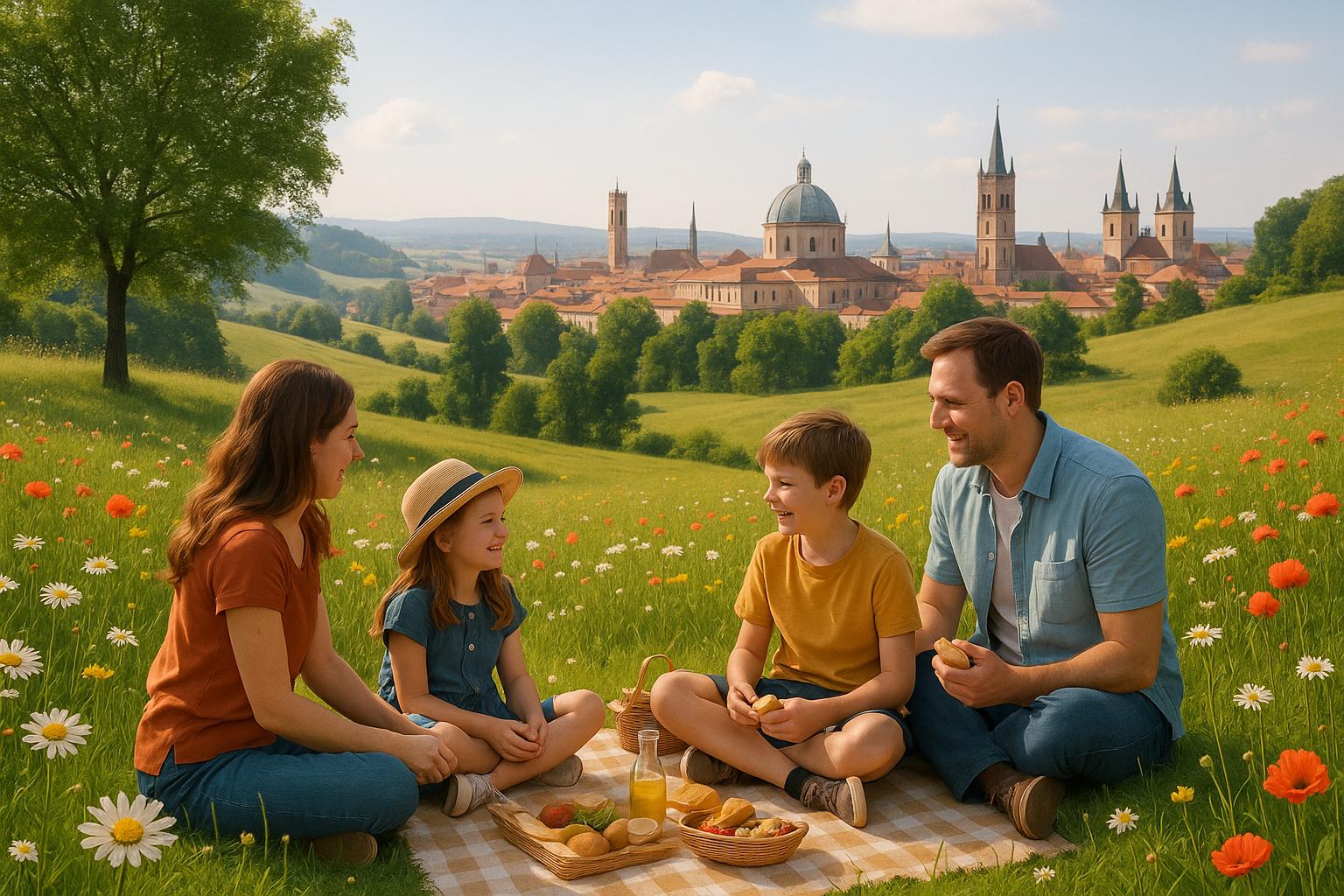
Spring in Europe brings mild temperatures, occasional rain, and cool evenings. Cities are well-prepared for unpredictable weather, offering plenty of indoor activities like museums, aquariums, historic sites, and cozy cafés. On the other hand, countryside trips often rely on outdoor activities like hiking, river swims, or farm visits. Persistent rain might require adjusting plans or driving longer distances to find indoor options. That said, the countryside in spring is undeniably beautiful, with lush green fields and blooming wildflowers creating a stunning backdrop for outdoor exploration before summer heat arrives.
Crowd levels also differ significantly. Cities like Rome, Barcelona, and London see a noticeable surge in tourists during late March and April, especially around Easter and U.S. spring break. Popular attractions often require advance bookings, and long lines are common. By contrast, the countryside remains much quieter, making it easier to explore charming villages, scenic trails, and local markets without the stress of crowds or prebooking every activity. While cities often showcase festivals and seasonal events, countryside destinations shine with their tranquil atmosphere, where blooming orchards and spring blossoms take center stage.
sbb-itb-e918b7f
How to Decide and Plan Your Spring Break
Questions to Ask Yourself
Start by considering your children’s ages and energy levels. Younger kids might thrive in the open spaces of the countryside, while older ones might enjoy the historical and cultural attractions of a city. Also, think about how much time you have. A 7-day trip is perfect for immersing yourself in one city, like Lisbon or Krakow. On the other hand, a 10-day vacation gives you the chance to explore rural areas, such as Portugal’s Alentejo or Poland’s countryside.
Next, reflect on your family’s travel preferences. Are you drawn to exploring historical sites, like those in Gdansk, or do you prefer outdoor adventures, such as hiking through the spring wildflowers of the Alentejo or admiring Switzerland’s Valais region with its apricot blossoms? Budget is another key factor. While city trips might cost more per day, they often come with the convenience of public transportation. In contrast, countryside stays can offer unique, often more affordable accommodations, though they might require renting a car. Lastly, think about the pace and accessibility your family needs. Cities offer a fast-paced itinerary with excellent infrastructure, while countryside destinations provide a slower, nature-filled escape, like the rolling hills and waterfalls of Umbria.
After weighing these factors, you might find that blending both urban and rural experiences creates a more balanced and enjoyable trip.
Combining City and Countryside
If your family enjoys both culture and nature, a combined itinerary can be the perfect solution. For instance, pairing London with the Cotswolds is a classic choice. You can spend a few days exploring London’s bustling attractions before taking a 1.5-hour train ride from London Paddington to Moreton-in-Marsh for peaceful village walks. For detailed tips on family-friendly activities in London and nearby day trips, check out Pigeon Pair and Me. A 7- to 10-day trip might look like four days in London followed by three days soaking in the charm of the Cotswolds.
Another great option is to combine Paris with Normandy. A quick 2-hour TGV train ride from Paris to Bayeux lets you balance the cultural vibrancy of Paris with Normandy’s coastal beaches and D-Day historical sites. This mix is especially handy for managing unpredictable spring weather and avoiding heavy crowds.
For something different, consider Lisbon paired with the Alentejo region. Just a 1.5- to 2-hour drive south from Lisbon brings you to fields of wildflowers and stargazing spots near Alqueva. This pairing offers a seamless blend of city energy and countryside tranquility, perfect for enjoying the mild weather from April to June. Plus, this approach keeps the itinerary varied and flexible, which is particularly useful when spring weather is unpredictable.
Planning Tips for U.S. Families
Tailor your itinerary to match your family’s travel style and logistics. For city-to-countryside connections, book high-speed train tickets early – they’re family-friendly and save you the hassle of unfamiliar roads. If your plans include multiple destinations across countries, a Eurail pass can simplify travel. For the countryside portion, renting a car is often a smart move, especially when you’ve got kids’ gear to carry.
Pack layers, including light jackets, long-sleeve shirts, and rain gear, along with comfortable shoes suitable for cobblestone streets and casual hikes.
To handle jet lag, start your trip in a city where you can adjust before heading to rural areas. Scheduling your countryside stay mid-trip allows everyone to settle in before tackling longer excursions. Be mindful of Easter dates – many U.S. spring breaks in late March or early April overlap with European Easter holidays, which can mean larger crowds and limited attraction hours. Book popular city attractions ahead of time, but keep your countryside plans flexible to allow for spontaneous adventures, like visiting a local farm or enjoying an unplanned nature walk. A balanced approach – spending about four days in the city and three days in the countryside – can ensure your family enjoys a mix of exciting urban exploration and peaceful rural downtime before heading home.
How to Balance Adventure & Relaxation on a Family Trip to Europe | Travel Tips & Itinerary Ideas
Conclusion
When deciding between a European city or countryside for your family trip, think about what aligns best with your family’s preferences. Cities pack in sightseeing, reliable public transportation, and plenty of indoor attractions, while the countryside offers open spaces, outdoor adventures, and a slower pace. Each comes with its own set of trade-offs, including costs, logistics, and the overall rhythm of your days.
The ideal choice depends on how your family enjoys spending vacation time. Families with younger kids might find rural farm stays or seaside villages more accommodating, offering room to roam and flexibility for naps. On the other hand, school-age children and teenagers who love history, bustling streets, and trying new cuisines might gravitate toward energetic cities like Lisbon or Krakow. For those who enjoy the great outdoors, hiking trails and spring blooms in the countryside can be a perfect match.
A mix of city and countryside can create a well-rounded itinerary. Many European countries – like Spain, Italy, France, and Portugal – offer a blend of vibrant cities, charming villages, and nature-filled regions to suit all budgets and travel styles. Even a week-long trip can balance exploration with relaxation. Europe’s diversity means you can experience everything from blooming daffodils to café-lined streets and historic castle views, whether you’re on a tight budget or planning a more indulgent getaway.
Once you’ve chosen between city, countryside, or a combination, detailed guides can help you plan family-friendly stays and activities tailored to your kids’ ages and interests. For personalized family itineraries and local tips on London, the U.K., and Europe, check out Pigeon Pair and Me.
FAQs
What are the top European cities for a family-friendly spring break?
Looking for a family-friendly spring break in Europe? London, Paris, and Rome are top picks. These cities are packed with iconic landmarks, fascinating museums, and activities that cater to both kids and adults. Whether it’s exploring the Tower of London, marveling at the Eiffel Tower, or stepping back in time at the Colosseum, there’s something for everyone.
If you’re after a more laid-back experience, Barcelona and Amsterdam are excellent choices. Barcelona offers gorgeous parks like Park Güell, along with sandy beaches perfect for unwinding. In Amsterdam, you can take a leisurely canal cruise or explore the city by bike, which is always a hit with families. Plus, spring brings a variety of seasonal events and festivals, adding even more fun to your trip.
What’s the best way to combine a city and countryside trip in Europe for families?
To get the most out of a trip that combines Europe’s vibrant cities with its peaceful countryside, it’s all about striking the right balance. Begin your adventure with a few days in the city, where you can dive into iconic landmarks, fascinating museums, and attractions that are fun for the whole family. Once you’ve soaked up the urban energy, head to the countryside to unwind with fresh air, outdoor activities, and breathtaking views.
When planning, pick accommodations near the main attractions in each spot – this saves time and keeps things convenient. For getting around, trains are a reliable option, but renting a car offers more freedom, especially in rural areas. By giving yourself enough time to savor both the city buzz and the countryside calm, you’ll create a trip that’s both exciting and relaxing – a perfect mix for a memorable family getaway.
What should I keep in mind when traveling to Europe with young kids?
Traveling to Europe with young kids? Prioritizing accessibility, child-friendly activities, and comfort can make all the difference. Be sure to pack essentials like snacks, small toys or activities to keep them entertained, and clothing that can handle Europe’s unpredictable weather shifts.
For city adventures, seek out stroller-friendly attractions and restaurants with menus that cater to kids. Planning a countryside escape? Be ready for outdoor fun and uneven paths – sturdy shoes for everyone are a must.
Opt for destinations with family-focused accommodations and build in plenty of rest breaks to keep everyone happy. While many European cities boast excellent public transit, it’s worth checking stroller access in advance. By focusing on safety and convenience, you’ll set the stage for a smooth and enjoyable family trip.