Ultimate Guide to Kid-Friendly Festivals in Europe

Europe offers a fantastic summer festival experience for families, especially American ones, thanks to its kid-friendly events, convenient travel options, and alignment with U.S. school breaks. These festivals feature children’s zones with activities like puppet shows, workshops, and storytelling, along with family-friendly amenities such as stroller-accessible paths and quiet camping areas. Whether you’re traveling with toddlers or teens, there’s something for everyone. Here’s what you need to know:
- Best Time to Visit: June–August aligns perfectly with U.S. summer vacations.
- Top Festivals: Just So Festival (UK), Green Man Festival (Wales), Lollapalooza Berlin (Germany), and Festival Mondial des Théâtres de Marionnettes (France).
- Travel Tips: Use Europe’s rail system or budget airlines for easy country-hopping. Book tickets, flights, and accommodations early.
- Packing Essentials: Layered clothing, rain gear, sunscreen, snacks, and reusable water bottles.
- Budget: Expect costs for a family of four to range from $2,150–$3,450 for flights, $160–$270 per night for lodging, and $325–$650 for festival tickets.
Choose a festival that matches your kids’ ages and interests, plan around one main event, and build in time for sightseeing or downtime. With careful preparation, a European family festival trip can create lasting memories.
How to Pick the Right Festival for Your Family
What to Consider Before Booking
When planning a festival trip with your family, it’s important to choose one that matches your kids’ ages and interests. For the youngest attendees – babies and toddlers (0–3 years) – look for festivals offering baby-changing facilities, quiet family camping areas, and shaded spaces to keep them comfortable. If your kids are in the early school-age range (4–9 years), they’ll enjoy festivals like Just So Festival that feature storytelling, crafts, and outdoor activities. For tweens and teens (10+), you’ll need something a bit more engaging. For example, Latitude has an “Inbetweeners’ Teen Area” focused on music, media, and tech, while Lollapalooza Berlin’s “Kidzapalooza” offers workshops and concerts tailored to younger audiences.
The size and vibe of the festival also play a big role. Large city festivals often feature big-name performers but can come with massive crowds and long walks, which might overwhelm younger kids. On the other hand, smaller, family-focused festivals tend to be more relaxed, easier to navigate, and better suited for families.
Location is another key factor, especially for U.S. families traveling abroad. Festivals near major cities or airports make travel much easier. Cities like London, Paris, Berlin, Barcelona, and Dublin are major international hubs, offering convenient transatlantic flights and easy connections to festival sites via train or short flights.
Lastly, think about where you’ll stay. Many family-friendly festivals in the UK and Europe offer dedicated family-only campsites with quieter hours. For added comfort, off-site hotels provide private bathrooms and soundproofing. If you want a balance between camping and convenience, glamping options are a great choice – especially when traveling with little ones. Whatever you decide, book accommodations early, as summer festivals tend to fill up fast.
Travel Planning for U.S. Families
Once you’ve picked the perfect festival, get a head start on travel arrangements. Family-friendly festivals often sell out quickly, particularly for camping and glamping options, so grab your tickets as soon as dates are announced. After securing your tickets, book refundable flights and aim to arrive 1–2 days before the event to give everyone time to adjust to jet lag.
Most European summer festivals run between June and August, with daytime temperatures typically ranging from the low 60s°F to the mid-80s°F, depending on the region. Northern areas like the UK and Ireland tend to have cooler, unpredictable weather, with evening temperatures dipping into the 50s–60s°F. Southern Europe, on the other hand, can get much warmer, often reaching the upper 80s°F or higher.
Packing smart is essential for a smooth trip. Bring layered clothing to handle changing weather, waterproof jackets and rain boots for unexpected showers, and a warm layer for cooler nights. Sturdy closed-toe shoes, wide-brimmed hats, and child-safe sunscreen are must-haves. Don’t forget reusable water bottles to stay hydrated. Other essentials include noise-reducing ear defenders for kids sensitive to loud sounds, a lightweight stroller or baby carrier, a simple first-aid kit with familiar medications, snacks for picky eaters, a power bank for charging devices, and printed copies of your tickets. With a bit of preparation, you’ll be ready for an unforgettable family adventure.
Best Kid-Friendly Summer Festivals in Europe
United Kingdom and Ireland
Europe is packed with festivals that cater to families, and the United Kingdom and Ireland have some of the best options. The Edinburgh Festival Fringe (August 1–25, 2025) is a standout, thanks to its "Fringe for Kids" program. Families can enjoy theater, magic shows, circus acts, and street performances that appeal to all ages. Plus, the city itself offers attractions like Edinburgh Castle and pedestrian-friendly streets, making it easy to explore. For a more intimate experience, the Just So Festival (August 15–17, 2025) in Cheshire is designed for kids aged 3–12, with storytelling, woodland adventures, and circus workshops creating a magical atmosphere. Over in Wales, the Green Man Festival (August 14–17, 2025) offers a "Little Folk" area packed with activities like craft workshops, puppet shows, baby yoga, and even a science garden – all set against the stunning backdrop of the Brecon Beacons. Meanwhile, Ireland’s Forest Fest in County Laois brings live music and arts to a cozy village setting, perfect for families looking for a laid-back vibe.
Western Europe
In Western Europe, family-friendly festivals are just as exciting. Lollapalooza Berlin (July 18–20, 2025) features "Kidzapalooza", a dedicated area with children’s concerts, workshops, and play zones. The festival’s fenced layout, clear signage, and flat urban venue make it stroller-friendly and easy to navigate. Austria’s Pflasterspektakel (July 17–19, 2025) turns Linz’s historic center into a vibrant stage for clowns, magicians, acrobats, and musicians. The car-free streets and visual performances make it ideal for families, even if they don’t speak the local language. In Spain, WOMAD Cáceres (June 6–9, 2025) offers a "World of Kids" area where children can explore global music workshops, hands-on crafts, and interactive performances. The festival’s location in a walkable historic town adds to its charm.
Southern Europe
Heading south, Festival Mondial des Théâtres de Marionnettes (August 15–24, 2025) in Charleville-Mézières, France, is a dream for families, with puppetry and storytelling performances that captivate toddlers to teens. The visual nature of the shows makes them accessible to everyone, regardless of language. In Provence, the Zigzag Festival (June 28–30, 2025) combines music and nature with eco-conscious activities. Kids can dive into art workshops, environmental projects, and family-friendly concerts in a relaxed rural setting. Slovenia’s Floating Castle Festival offers a unique mix of music, theater, and street performances in a castle setting. Families can enjoy roaming performers and workshops in circus skills, puppetry, and crafts, creating a magical experience for all ages.
Central and Northern Europe
Central and Northern Europe also offer family-friendly options. In Finland, Mitäs Mitäs Mitäs is a small arts and music festival perfect for families, with workshops, performances, and participatory art that appeal to all age groups. Finland’s long summer days, with temperatures ranging from 60–70°F, mean you might need blackout shades for little ones and layered clothing for cooler evenings. Malta’s Earth Garden is a multi-day music and arts festival featuring green spaces, craft stalls, and relaxed stages showcasing world music and electronic acts. It’s great for grade-schoolers and teens, with child-friendly daytime activities. However, early summer temperatures in Malta often climb to 80–90°F, so don’t forget sun protection, plenty of water, and some shade during the hottest parts of the day.
sbb-itb-e918b7f
Planning Your Festival Trip
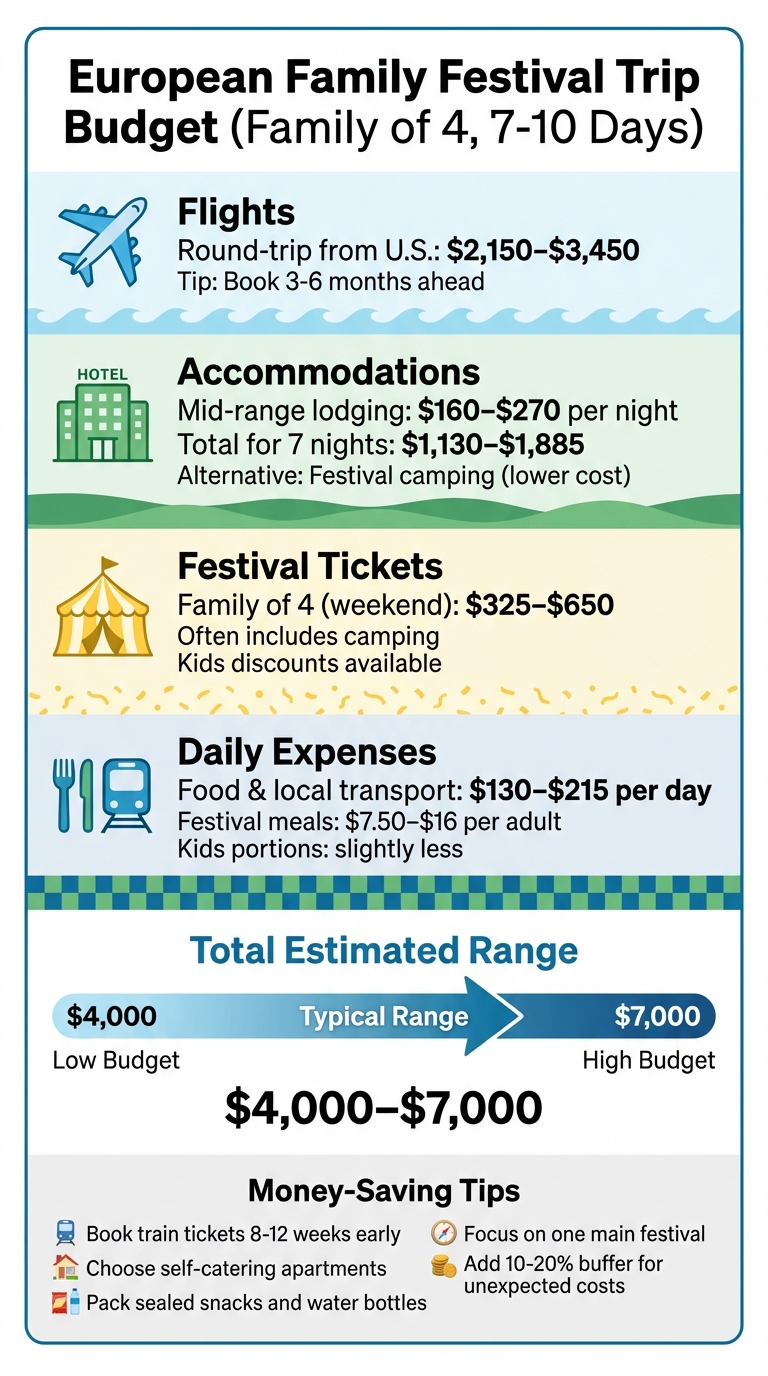
European Family Festival Budget Breakdown: 7-10 Day Trip Costs for Family of Four
Building Your Travel Route
Start your journey by centering it around one main festival, then plan stops at nearby destinations within a 2–3 hour drive or train ride. For instance, you could spend three days in London exploring its museums and parks, head to the Just So Festival in Cheshire for a few nights of camping, and then wrap up your trip with a couple of days in a historic town like Chester or York before heading home. This "hub-and-spoke" approach minimizes the hassle of constant packing and unpacking.
If you’re flying in from the U.S., aim for the city closest to your primary festival and consider booking an open-jaw ticket. This means you’d arrive in one city and depart from another, saving time and avoiding unnecessary backtracking. For example, you could combine a few days in a major city with a nearby weekend festival, then spend your last days near your departure airport.
When it comes to transportation, trains are ideal for connecting major cities and urban festivals. On the other hand, renting a car is often better for rural camping festivals like Green Man in Wales or Just So Festival, where you’ll need to transport gear and navigate country roads. Once you’ve nailed down your route, break down the costs to fine-tune your budget.
What a Family Festival Trip Costs
After sketching out your itinerary, it’s time to get a handle on the expenses. For a family of four taking a 7–10 day trip, round-trip flights from U.S. hubs typically range from $2,150–$3,450 during peak summer travel. Booking your tickets three to six months ahead usually gets you the best deal.
For accommodations, mid-range family lodging in European cities or near festivals costs about $160–$270 per night, which totals around $1,130–$1,885 for a weeklong stay. Alternatively, camping at UK festivals like Just So, Green Man, or Camp Bestival can significantly cut lodging costs. However, if you’re flying from the U.S., you’ll need to factor in gear expenses.
Festival tickets for family-friendly events often come with discounts for kids or bundled family rates. A long weekend festival for a family of four, including camping, might cost $325–$650, though larger music festivals could be pricier. Budget an additional $130–$215 per day for food and local transportation. Festival days tend to cost more because on-site food stalls charge around $7.50–$16 per adult meal, with slightly lower prices for kids’ portions.
To keep costs under control, choose one main festival and fill the rest of your trip with free or low-cost activities like parks, playgrounds, and walking tours. Booking self-catering apartments between festival days can also help you save by allowing you to prepare simple meals. To trim transportation expenses, book train tickets 8–12 weeks in advance, opt for mid-week flights, and share checked luggage whenever possible.
Festival Day Tips for Families
Once your route and budget are in place, a few practical tips can help make each festival day enjoyable for everyone.
If you’re attending with babies or toddlers, treat the festival like an extended park visit. Arrive after breakfast, focus on morning activities like storytelling or crafts, and take a break mid-day – either heading back to your base or finding a shady spot for nap time. Plan to leave before the late-night headline acts to avoid overtired meltdowns. Many festivals offer morning programming specifically designed for young children.
For school-age kids, structure the day into manageable blocks. Start with one workshop or performance in the morning, take a mid-day rest in a family area, and finish with an evening show. Skip the late-night acts, or take turns with another adult so one of you can enjoy the music while the other stays with sleeping kids. Festivals like Latitude and Camp Bestival provide calm family zones and tailored kids’ schedules to make planning easier.
European summer weather can be unpredictable, so pack layers. Lightweight T-shirts, a warm fleece or sweatshirt, and a waterproof jacket are essentials for everyone. For UK and Northern Europe festivals, waterproof boots or quick-dry sneakers handle muddy fields, while Southern Europe calls for breathable clothing and wide-brim hats. Don’t forget sunscreen, reusable water bottles, and ear protection like child-sized earplugs for kids near loud stages. A sturdy stroller with a rain cover or a comfortable baby carrier can make navigating festival grounds much easier, while a lightweight picnic blanket or compact camp chairs add comfort during long sets.
Start each festival day with a hearty breakfast at your lodging or campsite – think oatmeal, yogurt, fruit, or sandwiches. This helps reduce reliance on pricey festival food right away. Most festivals allow families to bring sealed snacks and water bottles, so pack items like granola bars, fruit pouches, nuts (if appropriate), and crackers to keep everyone fueled between meals. Locate water refill stations early on and make hydration a priority, especially if you’re in a warmer climate.
Conclusion
Pick a festival that aligns with your children’s ages, interests, and safety needs, while fitting into the U.S. summer break schedule. Whether you opt for a smaller, family-oriented event or dive into a bustling city festival, plan a flexible itinerary that balances festival fun with nearby sightseeing and downtime. This approach helps ensure a smooth and enjoyable experience for the whole family.
Be sure to budget carefully – factor in flights, lodging, festival tickets, food, transportation, and an additional 10–20% for unexpected expenses. Booking early can help you lock in better deals. On festival days, arriving early, dressing in layers, bringing sun protection, and taking mid-day breaks can make all the difference in keeping everyone comfortable – even if you don’t catch every performance.
European family-friendly festivals are thoughtfully designed for kids, providing safe, well-organized spaces where children can immerse themselves in the festivities. With some basic planning, even first-time travelers can enjoy an effortless and rewarding experience. Starting with one carefully chosen festival and a straightforward travel plan can lead to unforgettable memories for your family.
For more detailed guides, insider tips, and itinerary suggestions for European family travel, visit Pigeon Pair and Me.
FAQs
What are the best family-friendly festivals in Europe for kids of all ages?
Europe is home to a wide range of family-friendly festivals, offering something special for kids of all ages. If you have younger children, you might want to check out the magical children’s festivals in London, where activities like storytelling, puppet shows, and interactive play areas take center stage. For school-age kids, Germany’s cultural celebrations are a hit, featuring lively parades, music, and hands-on crafts that spark creativity. Meanwhile, teenagers can dive into the vibrant seasonal festivals of Scandinavia, enjoying outdoor concerts, bustling food markets, and even adventure sports.
These festivals are crafted to bring families together, making them perfect for unforgettable shared experiences. To make the most of your trip and pick the right events, explore detailed guides and online recommendations tailored to your interests.
What’s the best way to budget for a family-friendly festival trip in Europe?
Planning a family trip? Start by breaking down the major expenses: flights, accommodation, food, activities, and souvenirs. To keep costs in check, hunt for family discounts, free events, or special deals. Booking in advance can save you from pricey last-minute surprises.
While traveling, use the local currency to avoid extra fees and keep a close eye on your spending to stay within budget. Even small choices, like packing snacks or opting for accommodations with kitchen facilities, can make a big difference in cutting down expenses.
What tips can help U.S. families enjoy European festivals hassle-free?
Planning ahead can make your European festival adventure much smoother. Start by double-checking that your passport and travel documents are current and ready to go. When it comes to spending money, it’s a good idea to carry euros or the local currency, as not all vendors may take cards. Pack for unpredictable weather – layered clothing is your best friend since temperatures can shift unexpectedly. Keep yourself hydrated, especially if you’ll be spending long hours outdoors. To make the most of your time, review the festival schedule beforehand so you don’t miss out on must-see events. Lastly, get familiar with public transportation options in the area. It’s a convenient way to get around and can save you both time and hassle.