Train vs Car: Travelling Europe with Family

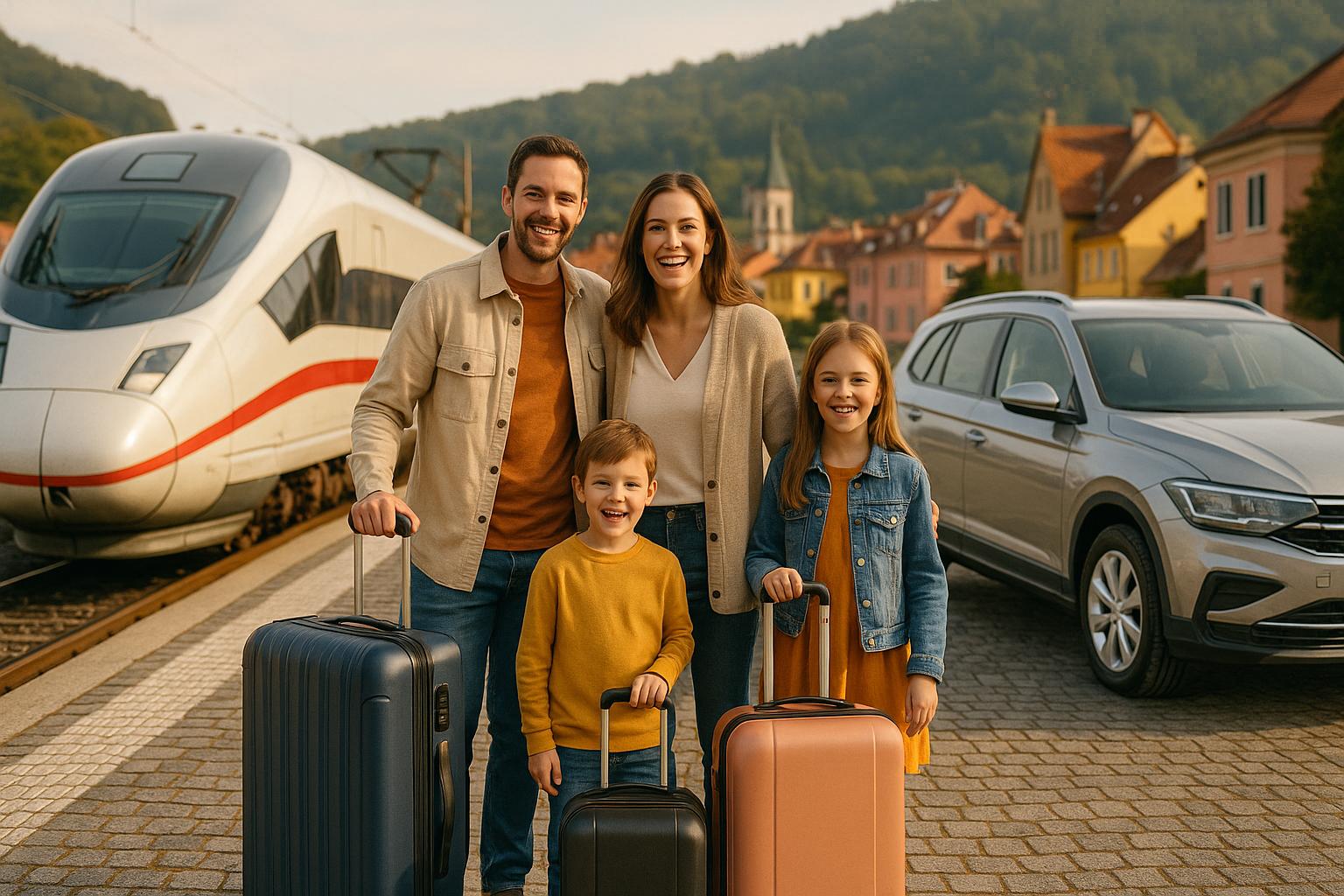
When deciding how to travel across Europe with your family, the choice between trains and cars depends on your destinations, budget, and preferences. Here’s the quick breakdown:
- Trains: Great for city-hopping, stress-free travel, and keeping kids entertained with onboard amenities. Ideal for major hubs like Paris, Amsterdam, or Rome. However, reservation fees and limited access to rural areas can add challenges.
- Cars: Perfect for exploring countryside spots like Tuscany or the Scottish Highlands. Offers flexibility for spontaneous stops and extra luggage space. But fuel, tolls, parking, and unfamiliar driving conditions can increase costs and stress.
Quick Comparison:
| Feature | Train Travel | Car Travel |
|---|---|---|
| Cost | Discounts for kids; extra fees for reservations | Fuel, tolls, parking, and rental costs |
| Flexibility | Fixed schedules | Freedom to set your own pace |
| Comfort | Spacious seating, dining cars | Control over stops and environment |
| Access | Best for cities | Best for rural areas or remote spots |
| Travel Time | Faster for city-to-city routes | Door-to-door for less accessible areas |
For a family trip, consider your itinerary. Trains are better for urban-focused travel, while cars suit countryside adventures. Sometimes, a mix of both works best.
Train Travel with Kids: 10+ Countries in 5 Weeks with Eurail
Cost Breakdown: Train Passes vs Car Rental Expenses
Comparing the costs of train travel and car rentals requires a closer look at base fees and potential extras. Both options come with their own set of expenses, which can vary based on your travel plans and preferences.
Train Travel Costs for Families
Train travel often comes with family-friendly perks. For example, Eurail passes include discounts like one child traveling free per adult, along with flexible options such as first-class for added comfort or second-class for more savings. Booking in advance is key to securing seats, especially during peak travel seasons.
However, additional fees can quickly add up. High-speed trains like France’s TGV or Spain’s AVE often require reservation fees, which vary by route and season. If you’re exploring just one region, regional passes may be a more budget-friendly alternative to global passes, offering tailored options that better suit localized travel.
Car Rental and Driving Costs for Families
Driving introduces a different set of expenses. Car rental rates fluctuate depending on the season, with off-peak times generally offering better deals. A mid-size car that comfortably accommodates a family of four may be affordable during quieter periods but expect prices to rise during peak travel seasons.
Fuel is another major factor. Long road trips can significantly increase costs depending on fuel prices and the car’s efficiency. Additionally, tolls, highway fees, and permits required in certain countries can add to your budget. Parking fees, especially in major cities, can also become a notable expense. Many historic city centers have strict parking rules, so planning ahead is essential.
Insurance is another consideration. Rental companies offer various insurance packages, but check if your personal auto insurance covers international travel to avoid unnecessary expenses. Don’t forget extra charges for items like child car seats or GPS units, which can further increase the overall cost.
Cost Comparison: 2-Week Family Trip
For a two-week family trip across multiple European countries, the choice between train travel and car rental depends on your itinerary and travel style. Train travel often includes bundled costs with discounts and amenities, making it a convenient option for city-focused trips. With central train stations and easy access to urban destinations, it can save time and money on local transfers.
On the other hand, renting a car offers unmatched flexibility, especially for exploring rural areas or less accessible spots. Over time, this flexibility can make car rentals a more economical choice for trips involving remote destinations or extensive travel.
It’s also important to account for unexpected costs. Train travelers may need to budget for taxis or public transportation to get to their accommodations, while car renters should be prepared for possible traffic fines or the need for roadside assistance. Understanding these potential expenses can help you choose the option that best fits your family’s travel needs.
Convenience and Flexibility Comparison
When traveling with children across Europe, how you get around can make or break your family vacation. Beyond the cost considerations, it’s essential to think about how each mode of transportation impacts your daily travel experience. Both train and car travel offer distinct perks, catering to different family needs and preferences.
Train Travel Convenience
European train stations are designed with families in mind. They often feature waiting areas, play zones, and changing facilities, making the pre-boarding experience smoother. Boarding itself is a breeze, with options like priority boarding to help families settle in quickly. Plus, trains allow you to bring along essentials like strollers and car seats without the strict restrictions you might encounter elsewhere. Once onboard, the journey becomes an opportunity to relax – parents can focus on spending quality time with their kids instead of worrying about navigation or road conditions. With amenities like open seating and onboard dining, train travel creates a stress-free environment where families can unwind together.
Car Travel Flexibility
Car travel, on the other hand, brings a sense of freedom that many families appreciate. With a rental car, you can stop whenever and wherever you want – whether it’s for a quick break, a scenic detour, or an unexpected roadside attraction. This flexibility allows you to adapt your plans on the spot, catering to your family’s unique needs. Cars also offer plenty of storage space for all your gear, and you’re in full control of the environment inside the vehicle – everything from the temperature to the playlist can be tailored to your liking.
Convenience and Flexibility Comparison Chart
Here’s a quick look at how train and car travel stack up when it comes to convenience and flexibility:
| Feature | Train Travel | Car Travel |
|---|---|---|
| Schedule Control | Fixed departure times | Freedom to set your own schedule |
| Storage Space | Limited dedicated space | More room for luggage and essentials |
| Child Entertainment | Onboard amenities and open seating | Personal devices and frequent stops for variety |
| Navigation Responsibility | None – just sit back and relax | Full control over route planning |
| Weather Impact | Less influenced by weather conditions | Driving may be affected by weather |
| Bathroom Access | Onboard facilities available | Depends on finding rest stops |
| Meal Options | Onboard dining or packed meals | Freedom to choose when and where to eat |
| Luggage Handling | Managed during boarding | Loaded once at pickup, no transfers |
| Spontaneous Stops | Limited opportunities | Easy to make impromptu stops |
| City Center Access | Direct access via central stations | Parking challenges in urban areas |
Travel Time and Comfort Analysis
When planning a European family trip, the time spent traveling and the comfort of that journey are key factors that can shape your overall experience. Train and car travel each come with their own advantages and challenges, especially when traveling as a family.
Journey Times for Popular Routes
For routes between major cities like Paris and Amsterdam, trains are often quicker than driving. Cars can face delays from traffic, frequent stops, and border crossings. However, if your destination is a smaller town or a rural area, trains might require multiple transfers, potentially extending the total travel time. On the other hand, a car offers the convenience of door-to-door travel, which can save time in less accessible areas. These differences highlight the need to evaluate both travel time and comfort when deciding how to get around.
Comfort Levels: Train vs. Car
Comfort is a big deal when traveling with family, and trains tend to shine in this area. They allow passengers to move freely, which is a huge plus for kids. They can stretch their legs, visit dining cars, or enjoy family-friendly spaces like SBB’s Ticki Park, DB’s family compartments, or ÖBB’s children’s entertainment areas. This freedom of movement makes train travel more relaxed and engaging for everyone.
Car journeys, by contrast, depend heavily on the vehicle and how well the trip is planned. While you have complete control over stops, music, and temperature, long car rides can be tough for active kids who might feel restless in a confined space. Drivers, too, can face challenges, from sitting for long periods to navigating unfamiliar roads, which can add stress to the journey.
Trains also offer the unique advantage of overnight options. Sleeper trains combine travel with rest, allowing families to cover long distances while sleeping. Booking private compartments can add an extra layer of comfort and privacy, but these need to be reserved well in advance.
To avoid travel fatigue, many seasoned family travelers suggest keeping train segments under three hours whenever possible (unless using sleeper services). Breaking up long trips into smaller, manageable portions allows time for rest and exploring local sights, turning travel days into more enjoyable experiences.
Onboard amenities also play a big role in comfort. Trains typically offer accessible bathrooms, dining services, and dedicated family areas, all of which make a difference when traveling with kids. These features can significantly enhance the overall experience as you explore Europe together.
sbb-itb-e918b7f
Getting to Attractions and Destinations
When planning how to reach Europe’s top attractions, both trains and cars bring unique benefits to the table. Your choice will depend on the type of destination you’re heading to and the kind of experience you’re after. Let’s break it down.
Train Access to Cities and Tourist Sites
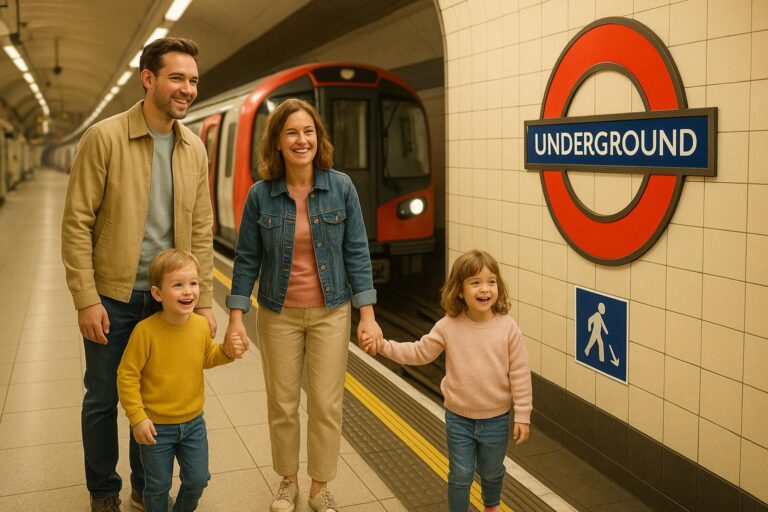
European trains are a traveler’s dream for city sightseeing. Major hubs like Paris Gare du Nord and Rome’s Termini put you right in the middle of the action. From London’s St. Pancras International, you can hop straight onto the Underground, while Amsterdam Centraal is just a short stroll from canal tours and the Anne Frank House. Even Disneyland Paris has its own RER station at Marne-la-Vallée, making it a breeze to reach by train.
Beyond convenience, train journeys can be part of the adventure. Take the Glacier Express in Switzerland, for example – it’s not just a way to get from St. Moritz to Zermatt; it’s a front-row seat to some of the most stunning Alpine views you’ll ever see. However, trains aren’t always the easiest option for rural spots. Visiting Neuschwanstein Castle in Bavaria, for instance, typically involves a train ride to Füssen followed by a bus trip.
Trains shine in cities, but if you’re looking to explore the countryside, driving might be the way to go.
Car Access to Rural Areas and Hidden Spots
For those wanting to uncover Europe’s quieter corners, nothing beats the freedom of a car. Picture yourself cruising along Germany’s Romantic Road, stopping at medieval towns like Rothenburg ob der Tauber or marveling at fairy-tale castles. These kinds of experiences are much simpler with your own set of wheels.
Some rural gems, like Plitvice Lakes National Park in Croatia or Ireland’s Ring of Kerry, are tricky to reach without a car. Driving also lets you stay in family-friendly accommodations outside busy urban centers, where there’s often more space and better value for your money.
That said, it’s worth noting that many European cities have Low Emission Zones, like London’s Ultra Low Emission Zone, which may require special permits or extra fees.
For many families, a mix of both options works best – trains for smooth city-to-city travel and a rental car for exploring rural areas or smaller towns. This way, you can enjoy the best of both worlds.
Family Travel Requirements and Policies
When planning a family trip across Europe, it’s not just about cost and convenience – your choice between train and car travel also hinges on how well each option meets family-specific needs. From managing luggage to ensuring child safety, understanding the policies and requirements for each mode of transport can make your journey smoother.
Luggage and Family Equipment
Train travel comes with specific luggage rules that families need to review before departure. Many European train operators limit the size and number of bags you can bring, which means items like strollers, car seats, and other baby gear might require extra planning. While strollers are generally allowed on board, storage space can be tight, and you may need to fold and store them in designated areas. Additionally, some train stations lack elevators or ramps, making it tricky to navigate with heavy or bulky items.
Traveling by car offers much more flexibility for packing. You can bring extra clothes, snacks, toys, and other essentials without worrying about strict limits. Plus, having a car lets you make spontaneous stops at local markets or stores along the way. However, keep in mind that frequent unpacking and repacking at each destination can be a hassle. To avoid potential theft, it’s smart to keep valuables out of sight when parking in busy tourist areas.
Child Travel Policies and Safety
Keeping children safe and comfortable is a top priority, and both train and car travel come with their own considerations. European trains are often praised for their family-friendly policies, with many operators offering free or discounted tickets for young children. Trains also provide the freedom for kids to move around during long journeys, which can be a relief for parents. Since policies vary by country and operator, it’s worth checking the specific details before you book.
If you’re traveling by car, you’ll need to follow strict child safety laws. Most European countries require children below a certain age or height to use an appropriate car seat or booster. While car rental companies typically offer child seats for an extra fee, availability and pricing can differ by location. Many families prefer to bring their own car seats, ensuring a proper fit and peace of mind.
Driving in Europe can come with its own set of challenges, especially for those unfamiliar with local traffic rules and road conditions. Narrow streets, unpredictable traffic patterns, and different driving customs can make the experience more demanding, particularly when managing restless kids in the backseat. Researching local driving laws and conditions can help ensure both safety and a smoother journey.
Choosing the Right Option for Your Family
Deciding between train and car travel depends on what works best for your family’s unique needs. Families with young children often find trains more suitable for long trips since kids can stretch their legs and move around during the journey. This added freedom can make a world of difference on longer routes. But don’t forget to weigh these advantages against your budget.
Cost is a big consideration. Families on a budget should carefully compare total expenses, factoring in extras like fuel, tolls, and parking fees. While Eurail passes can seem economical, hidden costs may arise, just as they do with car rentals. For those planning visits to major cities, trains often end up being the smarter financial choice, as parking fees in urban areas can climb quickly.
Your travel destinations also play a key role in this decision. If your plans focus on major European cities with strong rail networks, trains are a convenient option that eliminates the hassle of navigating unfamiliar streets. On the other hand, if your family wants to explore rural areas, quaint villages, or multiple attractions in regions like Tuscany or the German countryside, a car offers the flexibility to go off the beaten path and create a more personalized experience.
Luggage needs might tip the scales, too. Families traveling with bulky baby gear, sports equipment, or planning longer stays may appreciate the freedom of a car, which doesn’t impose strict weight limits. But it’s also important to consider your comfort level with driving in Europe – navigating narrow streets, understanding different road signs, and managing manual transmissions can be challenging. If that sounds stressful, trains might be the more relaxing option.
Lastly, think about your schedule. Trains are ideal for quick city-to-city connections, but cars let you adjust plans on the go. Want to make an impromptu stop or linger longer at a favorite spot? A car gives you that freedom.
Ultimately, balancing cost, convenience, and comfort will help you pick the best travel option for your family.
FAQs
What are the benefits of combining train and car travel for a family trip in Europe?
Combining train and car travel is a fantastic way to explore Europe with your family, offering the best of both worlds. Trains are perfect for moving between major cities, providing comfort, room to stretch, and the chance to unwind while soaking in beautiful landscapes. For families with young children, trains are especially convenient, often featuring play areas and ample space for luggage.
On the flip side, renting a car gives you the freedom to discover charming small towns, rural spots, and off-the-beaten-path attractions that trains can’t reach. This mix of transportation lets you balance ease and adventure, allowing you to customize your trip to suit your family’s preferences. By blending these two options, you can save time, minimize stress, and fully enjoy your European adventure.
How can I handle luggage and keep my kids safe while traveling in Europe by train or car?
When traveling through Europe with your family, two key considerations are managing your luggage and keeping your kids safe, whether you’re driving or taking the train.
If you’re traveling by car, you’ll have plenty of space for suitcases, strollers, and other essentials. This means no worrying about dragging bags through crowded train stations or squeezing everything into tight storage compartments. On the other hand, if you opt for trains, it’s smart to pack light since you’ll need to handle your luggage during boarding and disembarking. That said, many trains do provide designated storage areas, which can make things a bit easier.
When it comes to child safety, cars offer the advantage of using car seats and setting your own pace – perfect for families with younger kids. Trains, however, give children more freedom to move around during the ride, helping to keep them entertained and less restless. Both options have their perks, so the best choice really depends on your family’s specific needs and travel style.
How can I save money when deciding between train passes and car rentals for a family trip across Europe?
When planning train travel, weigh the cost of rail passes against individual tickets. Rail passes are often ideal for covering multiple destinations, but if you’re only visiting a few places, single tickets might save you more. Also, look into child discounts – they can be helpful, but surprisingly, adult fares might sometimes offer a better deal.
If you’re thinking about renting a car, factor in all the extra costs like fuel, tolls, and parking. A rental car can make sense for trips to rural areas or places where train connections are limited. It’s also a practical choice for families traveling with lots of luggage or young kids. Whether you’re booking train tickets or renting a car, planning ahead is a smart way to lock in better prices.