Child-Friendly Emergency Numbers in Europe

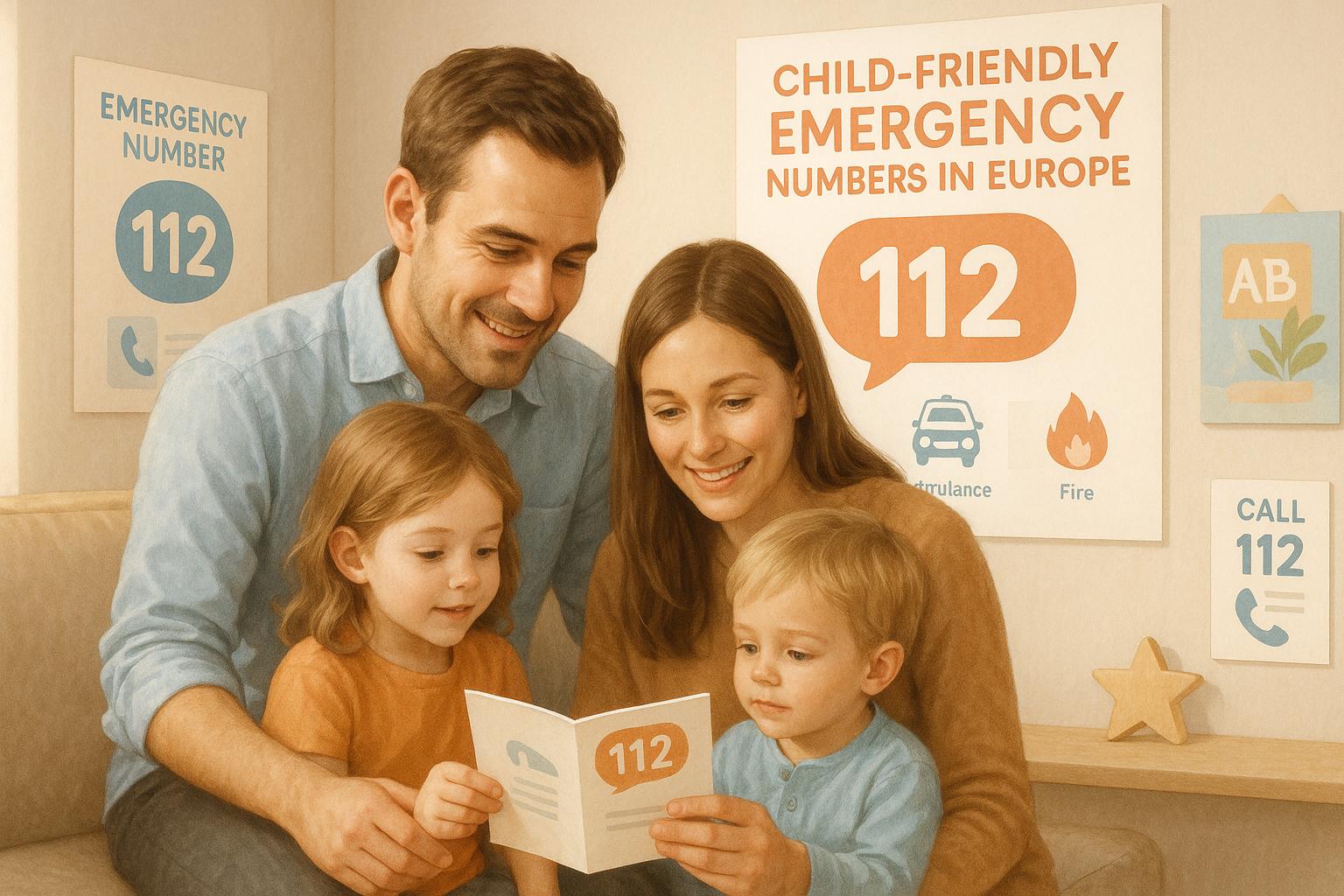
Europe has standardized emergency numbers to make it easier for families to get help when traveling. 112 is the universal emergency number for police, fire, and medical services in all 27 EU countries, plus some non-EU locations like the UK and Switzerland. It’s free, available 24/7, and works even without a SIM card. For child-specific issues, 116 000 helps locate missing children, while 116 111 provides confidential support for kids facing challenges like bullying or emotional distress. Some countries also offer 116 117 for non-urgent medical advice. Save these numbers and teach kids how to use them to stay safe during your family trips.
112 Kidsfilm EN
Key Help Numbers in Europe When With Kids
When you go around Europe with kids, you need to know the most important help numbers for fast help and care for kids. These numbers can keep you ready and safe when away from home.
112: The Number for All Urgent Help
112 is used in all 27 EU lands and some non-EU places like Switzerland, Ukraine, and the UK. It puts you in touch with the cops, medical help, and firefighters. It’s extra handy for travelers because a lot of the staff can talk English, and it works all day, every day on any phone – even ones without a SIM card.
For families in tough spots, like if a child has an allergy or gets hurt, this number can save lives. Still, it’s good to know that in some places, like the UK, 112 is used next to local numbers like 999. Knowing what each place does can help.
Help Lines For Kids
Europe has two key lines meant to help kids and families in tough times:
- 116 000: This line is for when kids go missing. It links you to pros who work with local groups to find kids fast.
- 116 111: This is for kids who are having a hard time, and it works in 23 EU countries and seven more in Europe. It gives free, private help for issues like being bullied, hurt, or sad. Set by the European Commission in 2007, this line makes sure families and kids have help when they need it most.
These lines cost nothing to call, and kids can call on their own if they can, or parents can do it for them.
For Not-So-Urgent Doctor Help: 116 117
For health worries that are not an emergency, 116 117 is good to call in some countries like Belgium, France, Germany, Italy, Luxembourg, the Netherlands, and Spain. This line gives advice when your kid feels a bit bad but does not need urgent care.
Instead of going right to the hospital, you can ring 116 117 for advice from pros. This help is often there 24/7 and can tell you if you should go for urgent help, see a local doctor, or handle it at home. But remember, this help is not in every place in Europe, so check if it’s there where you are heading.
| Number | Use | Where | Price |
|---|---|---|---|
| 112 | Cops, ambulance, fire team | Every EU + some other places | No pay |
| 116 000 | Line for lost kids | All EU places | No pay |
| 116 111 | Help line for kids in trouble | 23 EU places + 7 more in Europe | No pay |
| 116 117 | Help when not hurt bad | Some EU places only | No pay |
Need Help Fast? Country by Country
Big Places in Europe
While 112 is known all over Europe for emergencies, many places also have their own numbers, which might be faster, especially if kids are involved. Let’s look at the main numbers you might need in some big countries in Europe.
United Kingdom
In the UK, 999 is the top number for emergencies, but 112 also works and gets you to all help services. For help just for kids, Childline (0800 1111) is free, and 116 000 helps find missing kids, working with local cops.
France
In France, call 17 for the cops with 112 as an option too. For kids in trouble, dial 119 any time. The number for missing kids, 116 000, works too. A lot of people on 112 speak English, but some basic French might help.
Germany
In Germany, dial 110 for cop emergencies and 112 for health or fire help. Kids and teens can ring 116 111 for secret support.
Italy
Italy has 113 for the cops and 118 for health help. For child safety, Telefono Azzurro (19696) is the number to call. In places with lots of tourists, you often find help in English.
Spain
In Spain, reach the national cops at 091 or the rural guards at 062. The child helpline 116 111 helps kids feeling bad, and 116 000 is for finding missing kids. In big places, you can often talk to someone in English.
Netherlands
The Netherlands keeps it simple with 112 for all urgent needs. The operators are good at English.
Switzerland
Even though Switzerland isn’t with the EU, 112 works for emergencies and 117 for the cops. The child helpline 116 111 offers help in German, French, Italian, and English.
Check the table below for all the needed numbers.
Fast Numbers Table
Here’s a list of help numbers and kid help services for these places:
| Place | Urgent | Cops | Help for Kids | Lost Kids | Talk Notes |
|---|---|---|---|---|---|
| UK | 999, 112 | 999 | 0800 1111, 116 111 | 116 000 | English |
| France | 112, 17 | 17 | 119, 116 111 | 116 000 | English on 112 |
| Germany | 112, 110 | 110 | 116 111 | 116 000 | English on 112 |
| Italy | 112, 113 | 113 | 19696, 116 111 | 116 000 | English in busy spots |
| Spain | 112, 091 | 091, 062 | 116 111 | 116 000 | English in big towns |
| Netherlands | 112 | 112 | 116 111 | 116 000 | Strong English help |
| Switzerland | 112, 117 | 117 | 116 111 | 116 000 | Help in many tongues |
| Austria | 112, 133 | 133 | 116 111 | 116 000 | English on 112 |
| Belgium | 112, 101 | 101 | 116 111 | 116 000 | Dutch, French, English |
| Sweden | 112 | 112 | 116 111 | 116 000 | Good English help |
Many places have ways that send calls to the right help, even if you dial a wrong number. But, knowing the right numbers can save key time, most of all in bad times when kids are in need.
sbb-itb-e918b7f
Teaching Children to Use Emergency Numbers
Preparing kids for emergencies doesn’t have to be overwhelming. By practicing simple steps both at home and while traveling, you can help your child feel ready to handle unexpected situations. Here’s how to make it happen.
Practice Emergency Scenarios
Role-playing is a great way to help your child feel confident about calling for help. Set up practice sessions where you act out common emergencies they might encounter, especially while traveling. For example, have them practice dialing 112 and explaining the situation clearly and calmly.
Start with straightforward scenarios, like getting separated in a crowded tourist spot. Teach them to stay calm, approach a safe adult (like a police officer or store employee), and call 112. Make sure they know how to share basic information, such as their name, age, and where they’re staying. Encourage them to describe nearby landmarks, like “I’m by a big church with two towers” or “I’m near the train station with the red roof.”
You can also role-play situations like injuries or fires, following these key steps: call 112, stay calm, answer questions, and follow instructions. The more they practice, the more natural it will feel. To keep it fun and engaging, turn these sessions into a game, and use your actual phones so they get familiar with the dialing process.
Handling Language Barriers
Being in a country where the language is different can add an extra layer of stress during emergencies, but you can prepare your child for this too. Emergency operators on the 112 line across Europe often speak English, but teaching a few local-language phrases can make a big difference.
Before your trip, practice simple emergency phrases in the local language. For instance:
- French: Au secours (Help) and Je suis perdu (I’m lost)
- German: Hilfe (Help) and Ich bin verloren (I’m lost)
- Spanish: Ayuda (Help) and Estoy perdido (I’m lost)
Write these phrases on a small card and practice them with your child until they feel comfortable saying them. Keep the card with your child at all times, and include other useful sentences like “I need help,” “My parents are missing,” and “I don’t speak [local language].”
Teach your child to speak slowly and clearly when calling for help. If the operator doesn’t understand, they can try speaking English first and then refer to their phrase card. Most emergency services can connect to someone who speaks English or use translation tools to assist children in need.
Saving and Sharing Emergency Numbers
Quick access to emergency contacts is just as important as knowing what to say. Save all key numbers in your child’s phone under clear labels, and create a physical card with these numbers alongside your contact details.
Here’s what to include:
- 112 for general emergencies
- 116 000 for missing children
- 116 111 for child helplines
- Your hotel or rental address
- Your phone numbers
- Any local emergency numbers, including the police hotline for your destination
Label these numbers in your child’s phone with easy-to-find names like "Emergency Help" (112), "Missing Kids" (116 000), and "Kid Help" (116 111). Show your child exactly where these contacts are stored and how to access them quickly.
For added safety, label your contact information as "ICE" (In Case of Emergency) in their phone. Many emergency responders look for ICE contacts when assisting children. Include your name, relationship, phone number, and current location.
You can also use your phone’s emergency contact features, which allow access to key contacts even when the phone is locked. Set this up before your trip and show your child how to use it. This way, even if they forget your number, they can still reach you or emergency services without delay.
Lastly, make it a habit to check and update all emergency contact details regularly to ensure they’re accurate and functional when needed.
Family Travel Safety Resources
When traveling with children in Europe, having access to reliable safety resources is a must for families. Beyond just knowing the emergency numbers, tapping into official helplines and expert travel advice can make a big difference. These tools help parents stay informed, prepared, and confident while exploring new destinations with their kids.
Official Campaigns and Helplines
Official campaigns and helplines play a key role in keeping families safe while traveling. For example, the European Commission runs initiatives to raise awareness about emergency numbers, ensuring families across member countries know how to access help when they need it. These efforts aim to make emergency resources easier to understand and use for both parents and children.
One standout organization is Missing Children Europe, which coordinates the 116 000 hotline. This hotline offers multilingual support and works with local authorities to assist families, especially those facing language barriers. It’s a lifeline for families dealing with emergencies like missing children.
Additionally, several national organizations provide specialized support:
- Mannerheim League for Child Welfare (Finland): Operates the 116 111 child helpline, offering 24/7 counseling and assistance.
- Instituto de Apoio à Criança (Portugal): Focuses on helping families during emergencies, including cases of missing children.
- Rat auf Draht (Austria): Provides round-the-clock counseling for children and young people.
These organizations collaborate across Europe, ensuring families have consistent support no matter where they travel. Currently, the 116 111 child helpline is available in 23 out of 27 EU member states, giving families access to reliable assistance in most parts of Europe.
To complement these resources, Pigeon Pair and Me offers practical travel safety advice tailored specifically for families, making it easier to integrate these emergency tools into everyday travel plans.
Travel Safety Tips from Pigeon Pair and Me
For families looking for actionable safety tips, Pigeon Pair and Me is a go-to resource. Created by Stephanie Bennett, this blog focuses on family travel across London and Europe, blending safety advice with destination-specific recommendations.
What makes this blog stand out is its focus on practical, location-based guidance. Instead of general travel advice, it dives into the unique safety considerations for different European cities. For instance, it helps families identify safe spaces, understand local emergency services, and navigate cultural differences that could impact safety protocols.
The blog also highlights family-friendly activities and attractions where parents can feel confident about their children’s well-being. This thoughtful balance of fun and safety ensures that families can enjoy their adventures without unnecessary worry.
Seasonal safety is another key focus. From managing crowded tourist spots in summer to handling winter weather challenges, Pigeon Pair and Me offers tips to help families stay prepared for different scenarios. Whether it’s avoiding heat exhaustion during peak travel months or navigating icy streets, the blog’s advice is practical and easy to follow.
Its itineraries and hidden gem recommendations also weave in safety tips, ensuring families can explore confidently while staying mindful of emergency resources. By combining official emergency tools with the blog’s hands-on advice, families can create a solid safety plan and enjoy their travels with greater peace of mind.
Conclusion
When traveling in Europe, having emergency numbers ready can make all the difference in ensuring your family’s safety. Children, in particular, are vulnerable to situations like getting lost in busy tourist areas or needing medical attention far from home. In such moments, quick access to help is essential.
112 is the most important number every family should know. This universal emergency number connects you to police, fire, and medical services across all 27 EU countries. It’s available 24/7 and completely free to use. Unlike 911 in the United States, 112 provides consistent access to emergency services throughout Europe. Interestingly, while over 80% of EU citizens recognize the number, only 27% are aware it works across the entire region.
For emergencies involving children, two additional numbers offer specialized support: 116 000, the missing children hotline, and 116 111, the child helpline. The child helpline alone handled over 2.5 million contacts in 2022, and it’s available in 23 of the 27 EU member states. Knowing these numbers can provide reassurance, especially if parents aren’t immediately present to assist. Practicing with your children how to use these numbers can help them feel more confident and prepared.
Language barriers are less of an issue, as many 112 operators are fluent in English. Teaching your children how to clearly share key details when making an emergency call is a simple yet vital step.
To stay prepared, save these numbers both in your phone and on a physical card for easy access. Remember: 112 for general emergencies, 116 000 for missing children, and 116 111 for child support. Keeping these numbers at hand ensures you’re ready to act quickly when it matters most.
FAQs
How can I teach my child to use emergency numbers while traveling in Europe?
To ensure your child knows how to handle emergencies while traveling in Europe, start by teaching them about 112 – the universal emergency number used across most European countries. This single number connects to police, fire, and medical services, making it a vital tool. Show your child how to dial it from both a mobile phone and a landline.
You can also practice role-playing different scenarios to help them remain calm and clearly share essential details, such as their name, location, and what’s happening. For younger kids, you might want to write down key information – like your phone number and the address of your hotel – on a small card they can carry with them.
Additionally, it’s a good idea to familiarize yourself and your child with any country-specific emergency numbers, as some places might have additional services. A little preparation can go a long way in keeping your family safe during your travels.
What should I do if my child struggles with a language barrier when contacting emergency services in a non-English speaking European country?
If your child faces a language barrier while trying to access emergency services in Europe, don’t panic. Here’s what you can do to navigate the situation effectively:
- Call 112, the standard emergency number across Europe. Many operators speak English and can assist you or your child.
- Before traveling, teach your child a few essential phrases in the local language, such as "I need help" or "My parent is injured."
- If communication becomes difficult, request an English-speaking operator or share basic information like your location and the nature of the emergency. Emergency responders are trained to manage these challenges.
Being prepared can make all the difference. Carry a card with translations of critical phrases and emergency contact numbers for the country you’re visiting. It’s a simple step that can help keep your family safe during your trip.
How can I prepare my child for emergencies while traveling in Europe?
Preparing your child for emergencies during a family trip to Europe can make a big difference in ensuring their safety and giving you peace of mind. Start by teaching them about the emergency numbers used in the countries you’ll be visiting. In most European countries, dialing 112 will connect them to emergency services. Take the time to explain when and how to use this number in a way they can easily understand.
Make sure your child knows your contact details, including your phone number and where you’re staying. For younger kids, it’s a good idea to write this information on a small card they can keep in their pocket. Practice different scenarios – like what to do if they get separated in a crowded area – so they’ll know how to respond. Keep the instructions simple and easy for them to remember.
Don’t forget to pack a small emergency kit tailored to your child’s needs. Include essentials like any medications they take, a few bandages, and a list of allergies or medical conditions. Being ready for the unexpected will help everyone feel more at ease as you explore Europe together.