Road Trip Packing: Essentials for Babies and Toddlers

Taking a road trip with babies or toddlers? Here’s what you need to know: smart packing is the key to a smoother journey. From safety gear to snacks, every item you bring can make a big difference. Here’s a quick breakdown:
- Car Safety: Secure car seats properly, avoid bulky coats, and plan breaks every two hours.
- Organization: Use back-seat organizers, packing cubes, and a small cooler for snacks.
- Diapers & Cleaning: Pack enough diapers, wipes, and a portable changing pad. Don’t forget trash bags and cleaning supplies.
- Food & Snacks: Bring formula, baby food, or toddler-friendly snacks. Keep a cooler for perishables.
- Sleep & Comfort: Include travel cribs, sleep sacks, and white noise machines. Dress your child in layers for changing weather.
- Entertainment: Rotate toys, use coloring books, or pre-download shows for screen time.
- Emergency Prep: Have a first aid kit, roadside tools, and extra clothes ready.
- Documents: Carry passports, insurance info, and emergency contacts.
Pro Tip: Pack a day bag with essentials like extra outfits, snacks, and hygiene items for easy access during the trip. Plan for frequent stops and stay flexible with your schedule. The goal? Less stress, more memories.
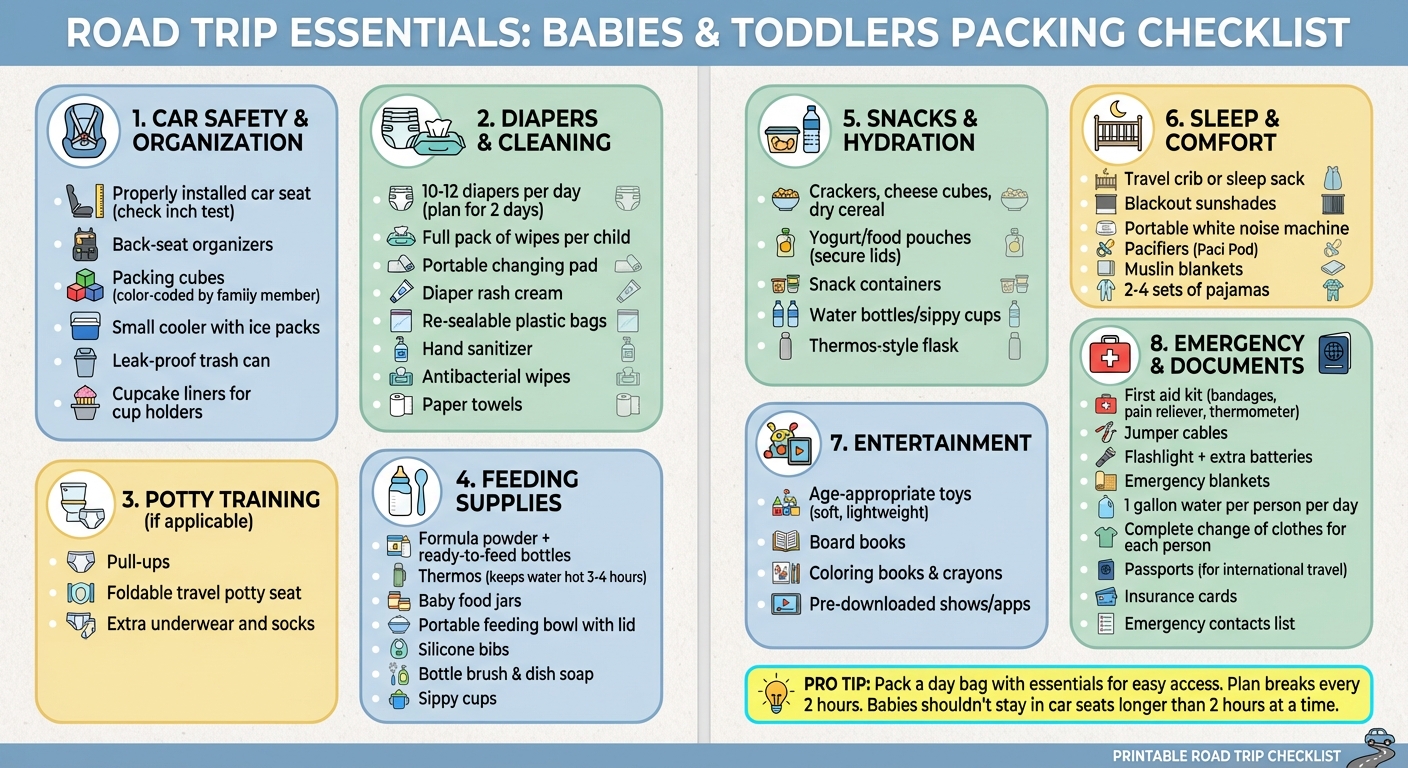
Road Trip Packing Checklist for Babies and Toddlers
ROAD TRIP WITH KIDS Packing & Organization Tips // Best Road Trip Hacks for Moms!
Car Safety and Organization
A well-prepared car isn’t just about convenience – it’s about ensuring safety and reducing stress for families on the go.
Car Seats and Safety Items
Securing your child’s car seat properly is one of the most important steps you can take for safe travel. First, double-check that your child’s weight and height fit within the car seat’s limits and that it’s being used in the correct mode. Experts recommend keeping children rear-facing for as long as possible because it offers better protection for their head, neck, and spine during a crash. Consumer Reports highlights this benefit clearly:
"A baby’s head and spine are better protected from injury when he or she rides facing the back".
Proper installation is just as critical as choosing the right seat. Use the "inch test": if the seat moves more than an inch in any direction, reinstall it until it’s secure. Also, check the seat’s recline angle using the built-in indicator. If the seat is too upright, it could restrict your baby’s airway; too reclined, and it increases the risk of injury during an accident. As Emily A. Thomas, PhD, Associate Director of Auto Safety at Consumer Reports, puts it:
"Proper installation is key".
When strapping your child in, avoid bulky coats, as they can compress in a crash and impact the harness’s fit. Instead, dress your child in a light jacket and place a blanket over the harness after buckling. Keep toys safely stored – loose items can become dangerous projectiles during sudden stops. And remember, babies shouldn’t stay in a car seat for more than two hours at a time; plan breaks to keep them comfortable and safe.
Once safety is squared away, focus on keeping your car organized for hassle-free travel.
Organizing Your Vehicle
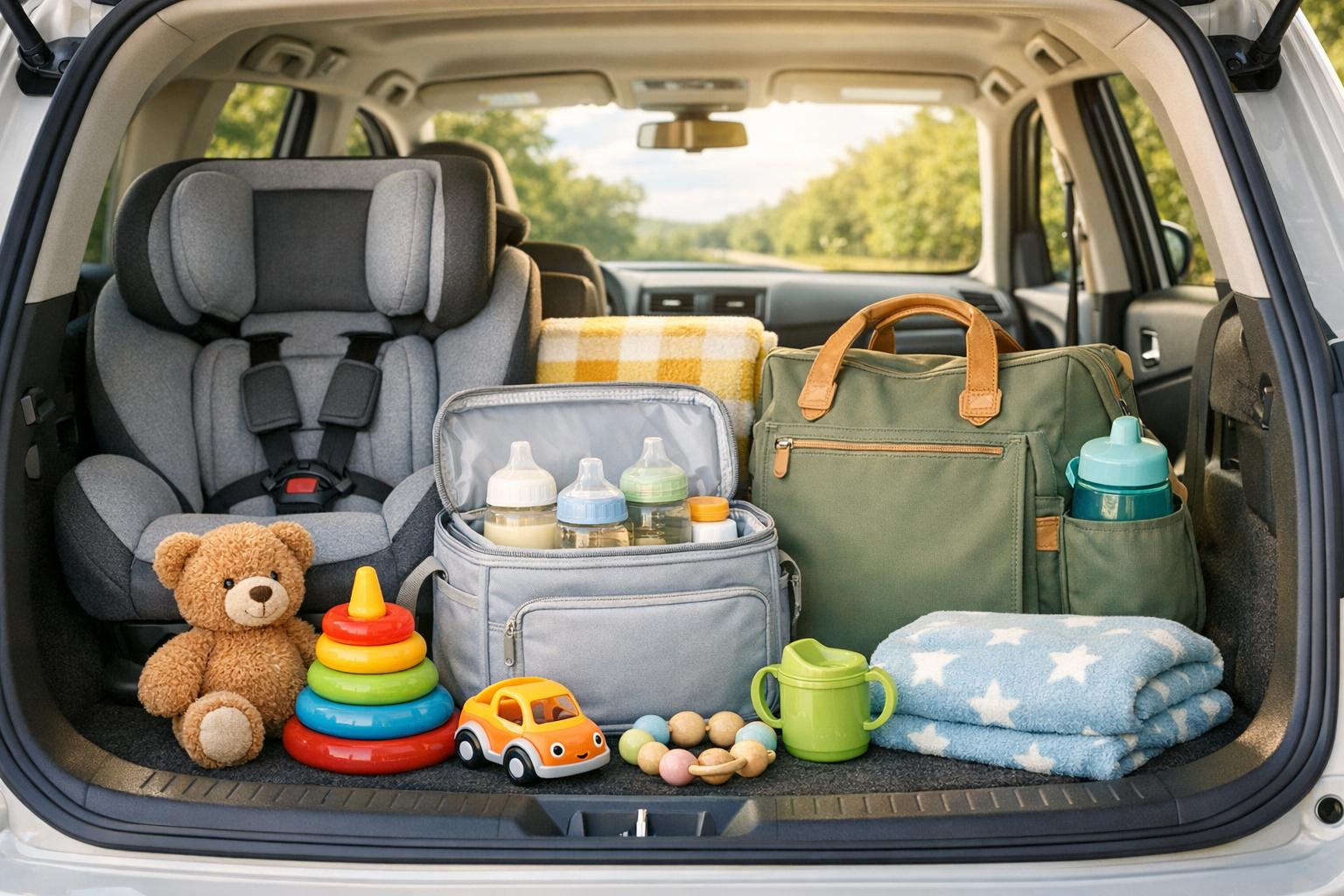
An organized car isn’t just about convenience – it can also enhance safety. Loose items can become hazardous during abrupt stops, so it’s important to secure everything. Back-seat organizers that attach to the front seats are a great way to keep essentials like diapers, wipes, and snacks within easy reach. Many of these organizers even come with compartments for tablets and other small items.
Colored packing cubes can make a world of difference, helping you assign items to each family member. For example, create mini bathroom kits with essentials like toothbrushes, toothpaste, wipes, sanitizer, and tissues, and store them in individual backpacks for easy access during pit stops. Snacks can be packed in equal portions in separate cubes or pouches, so they’re easy to share and within reach for kids. A small cooler bag with ice packs is perfect for keeping items like cheese cubes, juice boxes, or milk fresh.
To keep your car clean, secure a leak-proof trash can to a headrest and have waste bags on hand for dirty diapers or motion sickness cleanups. Store quick-cleaning supplies like carpet wipes and microfiber cloths in a small cube for easy access. Here’s a clever tip: line cup holders with cupcake liners to catch sticky spills before they become a problem.
While daily organization is key, preparing for the unexpected is just as important.
Emergency and Roadside Items
Traveling with kids means being ready for anything, and a well-stocked first aid kit is a must. Include essentials like bandages, sterile gauze pads, medical tape, antibiotic ointment, antiseptic wipes, disposable gloves, scissors, tweezers, instant cold and hot packs, and a non-glass thermometer. Don’t forget child-specific items like liquid pain reliever, hydrocortisone cream, calamine lotion, and insect repellent. If anyone in your family has severe allergies, make sure to pack an EpiPen. As Brian Graddon, a former firefighter paramedic, wisely notes:
"When it comes to a car first aid kit, it’s better to be over-prepared than underprepared".
For roadside emergencies, pack jumper cables (Energizer makes a reliable set for under $20), flares, a flashlight with extra batteries, a car charger, and a portable power bank. Include survival basics like water (1 gallon per person per day), non-perishable food, emergency blankets, a whistle, moist towelettes, garbage bags, hand sanitizer, and disinfecting wipes. Keep a paper list of emergency contacts, including roadside assistance, 9-1-1, poison control, and your doctor’s office – just in case your phone dies or loses service.
If car sickness is a concern, pack Sea-Bands or motion sickness bracelets, ginger candies, and bags for emergencies. Be prepared to stop for fresh air if needed. Finally, always have a complete change of clothes for each family member, especially for young kids, to handle spills or accidents.
Diapers, Potty Training, and Cleaning
Traveling with little ones means staying prepared for all kinds of messes and keeping them comfortable along the way. A little planning and smart packing can make all the difference.
Diaper Supplies
On average, babies go through 10–12 diapers a day, which works out to about one diaper change every two hours. For short trips, pack at least 6 diapers and one overnight diaper per day. For longer journeys, bring enough for two full days and nights, stored in an easily accessible bag. If you’re heading out for a week, plan on a full pack of wipes per child.
A portable or foldable changing pad is a must-have for convenient diaper changes in the backseat or trunk. Don’t forget diaper rash cream and hand sanitizer to keep things hygienic. For disposing of soiled diapers, re-sealable plastic bags or small wet bags are great for containing odors and messes. Some parents also opt for a portable diaper pail with refills for extended trips.
To stay organized, group complete outfits in quart-size storage bags – this way, if there’s a blowout, you can grab a clean set quickly, and the bag can hold the soiled clothes. If your trip includes swimming, pack swim diapers too.
Safety tip: always pull over to a safe stop before changing a diaper. Babies should be changed promptly after a bowel movement to avoid diaper rash, so plan for extra travel time to accommodate frequent stops. These breaks not only keep your baby clean but also help maintain a tidy vehicle.
Potty Training Items
For toddlers in the potty training stage, pull-ups can be a lifesaver during long drives. A foldable travel potty seat is handy for public restrooms, helping your child feel more comfortable with unfamiliar toilets. Pack extra underwear and socks since accidents are bound to happen. Regular stops are key – let your toddler stretch their legs and use the restroom. If possible, aim for stops at parks or playgrounds that have restrooms available.
Cleaning and Spill Management
Spills and messes are inevitable, so keep antibacterial wipes, paper towels, and trash bags within reach. Sterilized wipes are great for cleaning hands and surfaces. Microfiber towels work well for drying items and wiping up spills quickly. For food stains, a Tide-To-Go pen can be a lifesaver. To keep your car tidy, use a leak-proof trash can with a lid. And for bigger messes, a lightweight car vacuum cleaner can help tackle crumbs and debris between stops.
Up next, find out how to pack feeding supplies and manage temperature to keep everyone happy and nourished on the road.
Food, Snacks, and Water
When traveling with little ones, having the right supplies for meals and snacks can make all the difference. Keeping everything organized and within easy reach ensures smoother, stress-free stops. Let’s break it down into essentials for baby feeding, toddler snacks, and staying hydrated.
Baby Feeding Supplies
When it comes to feeding babies on the go, preparation is key. For formula-fed babies, pack formula powder and ready-to-feed bottles so you can skip the hassle of mixing while traveling. A compact thermos that keeps water hot for 3–4 hours is another must-have.
If you’re breastfeeding, consider bringing a dependable breast pump, along with milk storage bags or bottles, and a nursing cover for added privacy. For those transitioning to solids, pack baby food jars, finger foods, and age-appropriate snacks. A portable feeding bowl with a lid is a game-changer – something like the Tommee Tippee Easy Scoop bowl, which includes a spoon that locks onto the lid, can help you store leftovers easily. Don’t forget utensils, a bottle brush, dish soap, and sterilizing tablets (especially if your baby is under 6 months) to maintain hygiene.
Silicone bibs are a fantastic option for travel because they’re adjustable, easy to clean, and catch dropped food effectively. For example, NatureBond silicone bibs are known for their durability, even when folded or squeezed into tight spaces. A small cooler with ice packs is another great addition for keeping perishable items fresh. And always pack more food and formula than you think you’ll need – enough for the trip plus a few extra hours, just in case of delays.
Toddler Snacks
For toddlers, snacks should be simple, clean, and easy to handle. Think crackers, cheese cubes, or dry cereal – these options are much easier to manage than juicy fruits or crumbly treats that can create a mess. If you’re bringing yogurt or baby food pouches, make sure they have secure lids to avoid spills. A sippy cup for water and a snack container like the Sistema capsule pot, which features two compartments and an attached spork, can make snack time more convenient.
Always supervise toddlers during snack time in the car to avoid choking hazards. If you’re traveling alone, it’s safer to save snack time for rest stops so you can focus on serving food without distractions.
Water and Temperature Control
Keeping everyone hydrated is crucial. Offer water regularly and monitor hydration by checking for light yellow or clear urine.
Pack sippy cups and a sturdy Thermos-style flask to maintain water at the desired temperature. Store all feeding essentials in a dedicated bag to keep things organized and easily accessible.
sbb-itb-e918b7f
Sleep, Comfort, and Clothing
Sleep Items
Getting enough sleep is essential during a road trip, especially for little ones. A travel crib can be a lifesaver for overnight stays, offering your child a familiar and secure place to rest. If purchasing one isn’t practical, you can rent one from services like BabyQuip, which delivers cribs and other baby essentials right to your destination.
To keep your baby cozy and secure, pack sleep sacks or swaddles. Choose lightweight options that can handle changes in temperature. For daytime car naps, blackout solutions like sunshades or window covers can help create a darker, more restful environment.
A portable white noise machine is another great tool to block out disruptive noises, whether it’s traffic outside or noisy hotel neighbors. Don’t forget to bring familiar comfort items, like a pacifier. A product like the Paci Pod can keep pacifiers clean and easy to grab when needed.
Once sleep is covered, it’s time to think about clothing that can handle all kinds of weather.
Clothing for Different Weather
After sorting out sleep essentials, focus on clothing that can adapt to changing climates. A good rule of thumb: dress your baby in one extra layer compared to what you’re wearing. Babies and toddlers lose heat faster than adults, so they’re more sensitive to temperature changes.
For colder weather, layering is key. Start with a moisture-wicking base layer, add an insulating fleece mid-layer, and finish with a waterproof outer layer like a snowsuit. As Diana Spalding, CNM, explains:
"The general rule of thumb is that your baby should be dressed in one more layer than you feel comfortable in".
In warmer weather, go for lightweight, breathable fabrics. Add a wide-brimmed sun hat and sunscreen with at least SPF 30 for extra protection. Also, pack enough pajamas – two sets for short trips and three to four for longer journeys – to keep bedtime cozy and stress-free.
Comfort Items for the Car
Long car rides can be tough on little ones, so having comfort items within reach is a game-changer. Muslin blankets are incredibly versatile – they can provide warmth, double as nursing covers, or even act as makeshift sunshades.
Timing drives to match your child’s nap schedule can make the journey smoother, allowing you to cover more ground while they sleep. Playing soft music or calming nature sounds can also help toddlers settle down for car naps. For especially restless toddlers, driving at night might be a good option since they’re naturally sleepier then – just be sure you’re comfortable with nighttime driving.
Entertainment, Health Items, and Documents
With essentials like safety, feeding, and sleep taken care of, it’s time to focus on keeping your child entertained, healthy, and properly documented for the journey.
Keeping Babies and Toddlers Entertained
Long car rides or flights can challenge even the most patient child, so packing the right entertainment is a must. Choose toys that fit your child’s age and developmental stage. For babies, soft fabric toys or small board books can work wonders, while toddlers might enjoy simple puzzles, coloring books, or crayons. Safety should always come first – avoid heavy or hard toys that could become hazards during sudden stops. A good rule of thumb: if a toy could hurt if thrown, leave it out. Magnetic toys may be a fun option but require close supervision, especially if your child still puts things in their mouth.
To keep things fresh, rotate toys during the trip or mix in brief screen time with pre-downloaded shows or educational apps. This balance can help keep your little one engaged without over-relying on any single distraction.
Health and Medical Kit
A child-specific medical kit is a must-have for any trip, offering peace of mind when unexpected health hiccups arise. Start with a basic first-aid kit tailored for kids, including Band-Aids, antiseptic wipes, tweezers, and antibiotic ointment. Add child-size pain relievers and fever reducers, ensuring you follow your pediatrician’s dosage recommendations. For common travel-related issues, pack gas drops, gripe water, and probiotics to ease digestive discomfort.
Sun protection is another priority. Bring a kid-friendly SPF 50+ sunscreen, and for easier application on wiggly toddlers, consider a stick sunscreen. Pair this with a wide-brimmed hat for extra coverage. If bugs are a concern, don’t forget insect repellent. Other essentials include a thermometer, hand sanitizer, and, if carsickness is an issue, age-appropriate travel sickness remedies or acupressure wristbands.
Documents and Money
Proper documentation can save you from major headaches during your trip. For international travel, remember that even babies need their own passports. If traveling within Europe, apply for a Global Health Insurance Card (GHIC) to ensure your child can access healthcare under the same terms as local residents. Travel insurance is another must, especially one that covers your planned activities and any pre-existing medical conditions.
Additionally, if your travel involves shared parental responsibilities, secure written permission from all parties. A signed letter, along with supporting documents like your child’s birth certificate or any relevant divorce or marriage certificates, can help avoid unnecessary complications. Being prepared with these items ensures a smoother journey for everyone.
Conclusion
Packing for a road trip with babies and toddlers doesn’t have to be overwhelming if you break it down into categories. Think about car safety, organization, diapers, feeding supplies, sleep essentials, and entertainment – all aimed at keeping your little ones safe and comfortable. The goal is to strike a balance between being prepared and not overpacking – focus on what’s truly necessary.
For younger children, you’ll likely need more gear, so plan accordingly. A smart approach is using a two-bag system: a main suitcase for items needed at your destination and a smaller, easily accessible day bag for the journey. This bag should include essentials like extra outfits, snacks, and hygiene items. A helpful tip? Mentally walk through your child’s daily routine – from morning wake-up to bedtime – to make sure you’ve covered all the bases.
Tailor your packing list to your child’s age, specific needs, the destination, and even the season. For instance, a baby traveling in summer will need different items than a toddler heading to a snowy location. Keep your checklist updated on your phone to avoid last-minute stress.
Finally, embrace flexibility – adjust as needed along the way. With thoughtful planning and the right mindset, your family road trip has the potential to be an unforgettable adventure rather than a stressful challenge.
FAQs
How can I make sure my baby’s car seat is installed safely for a road trip?
To make sure your baby’s car seat is installed securely, here are some essential steps to follow:
- Start with the manuals: Take time to read both the car seat and your vehicle’s manuals. They’ll guide you through the specific installation process, whether you’re using the LATCH system or the seat belt.
- Position the seat correctly: Always place the car seat in the back seat. For infants, it should be rear-facing and kept away from active airbags.
- Secure it firmly: Whether you’re using the seat belt or LATCH system, the seat must be tightly secured. Check by pushing at the base – if it moves more than 1 inch in any direction, it needs to be tightened.
- Check the recline angle: For newborns, the seat should recline at the correct angle, typically around 45°, to properly support their head and keep their airway open.
- Adjust the harness: Ensure the harness straps are snug and flat, positioned at or below your baby’s shoulders. The chest clip should be at armpit level for proper safety.
Before every trip, give the car seat a quick once-over. Check the installation, harness fit, and recline angle. A simple inspection can help ensure your baby’s safety and give you greater peace of mind while on the road.
How can I keep my toddler entertained during a long road trip?
Keeping your toddler entertained during a long drive takes a little planning, creativity, and flexibility. Start by packing a small activity kit filled with mess-free crayons, a doodle pad, magnetic travel games, or small toys like puzzle cubes or counting beads. To keep their interest, switch out activities every 15–20 minutes. You could even introduce a simple reward system – like earning tickets for spotting certain landmarks or completing fun challenges – that can be exchanged for a treat during your next stop.
Screen-free entertainment can work wonders too. Sing-alongs, kid-friendly audiobooks, or short podcasts can keep little ones engaged, while a printable license plate game can involve the whole family. Don’t forget snacks! Healthy options like cheese sticks, halved grapes, or crackers paired with a reusable water bottle can help stave off hunger-related meltdowns.
Plan to stop every 1–2 hours to let your toddler stretch, run around, or explore rest-area play spaces. These breaks can do wonders for resetting their mood and burning off some energy. Staying organized also makes a big difference – use a shallow tray or small box to keep toys and supplies within reach and prevent them from disappearing under the seats.
With a blend of fun activities, tasty snacks, and regular movement breaks, your road trip can be much more enjoyable for everyone in the car.
How can I handle diaper changes and potty training during a road trip?
Managing diaper changes and potty training while traveling doesn’t have to be overwhelming – it just takes a little preparation and sticking to a routine.
For diaper changes, make sure your diaper bag is packed with the essentials: plenty of diapers, fragrance-free wipes, a portable changing pad, diaper cream, and resealable disposal bags. To make things even easier, keep a small kit with wipes and a couple of diapers within arm’s reach in the front seat. Plan to stop every 2-3 hours, not just for quick changes but also to give everyone a chance to stretch and recharge. When it’s time for a diaper change, use a clean surface like a portable changing pad or a towel to maintain hygiene and prevent skin irritation.
For toddlers who are potty training, a little extra planning can go a long way. Bring along a travel potty seat or a compact training potty, along with extra training pants, wipes, and a small “reward system” like stickers to keep things positive and encouraging. Before hitting the road, map out rest stops or family-friendly locations with clean bathrooms, and aim to stop every 2-3 hours to help establish a routine. Keeping a dedicated potty kit in the car – complete with wipes, sanitizer, and small treats – can turn bathroom breaks into something fun instead of a chore. With these simple steps, you can make the journey more enjoyable and stress-free for everyone.